
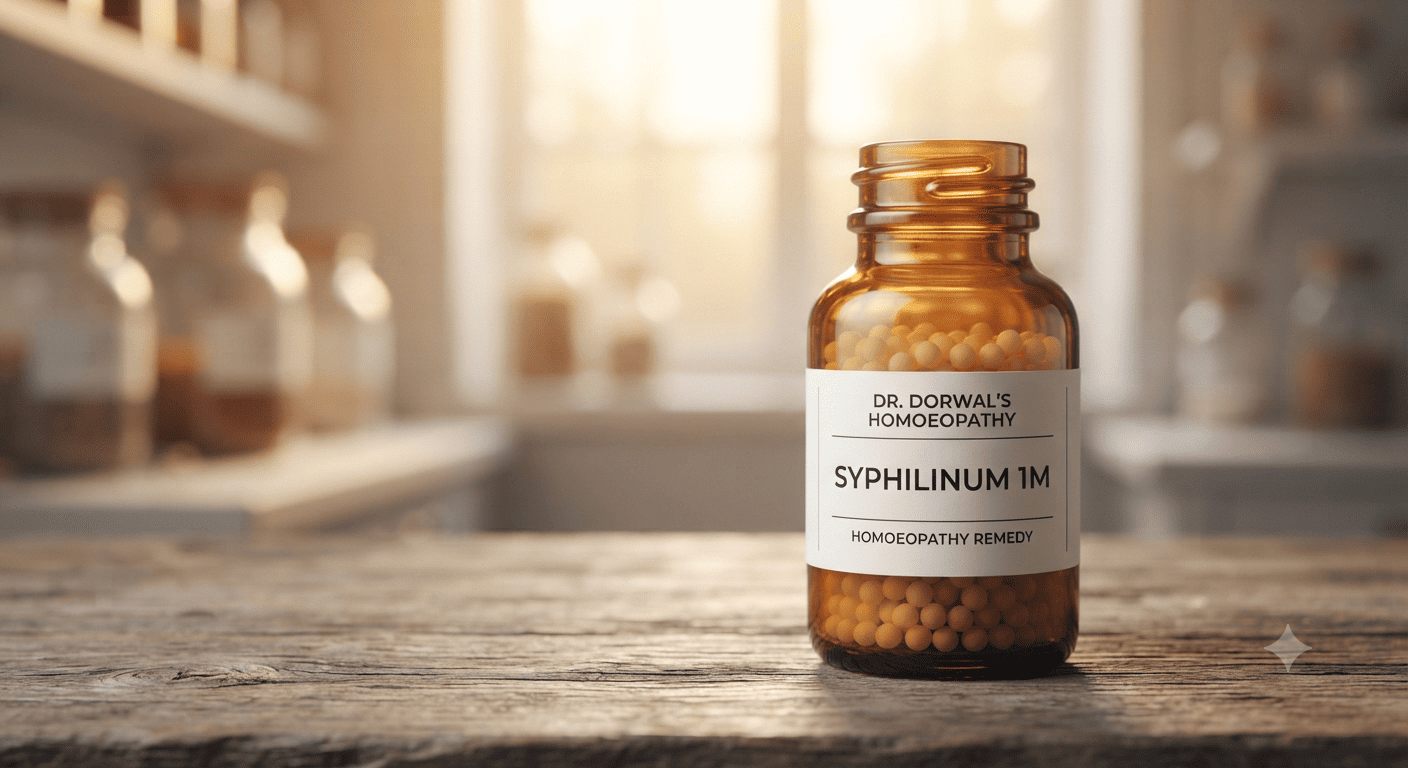
Syphilinum is a potent nosode within the homeopathic pharmacopoeia, derived from the syphilitic virus. It is characterized by a profound systemic impact, often indicated by utter prostration, chronic rheumatic conditions, and deep-seated tissue and bone affections.
Key Clinical Indications & Uses
The therapeutic profile of Syphilinum is extensive, covering complex, chronic, and often hereditary expressions of disease:
- Mental and Emotional States: It is indicated for patients experiencing significant memory loss, apathy, or the frightening sensation of impending insanity or paralysis. Patients often suffer from intense fear of the night and a deep sense of hopelessness regarding recovery.
- Bone and Tissue Pathology: The remedy addresses conditions involving caries of the nasal bones, hard palate, and septum, as well as syphilitic affections of the ear ossicles. It is also indicated for severe, nocturnal pains in the long bones and muscles that may feel contracted into hard knots.
- Ocular and Respiratory Health: It supports the treatment of chronic, recurrent phlyctenular inflammation of the cornea, tubercular iritis, and ptosis. Respiratory indications include chronic summer asthma, aphonia, and dry, hard coughs that worsen at night.
- Dermatological and Secretory Concerns: Clinical use is noted for chronic eruptions, ichthyosis, and indolent ulcers. It is also relevant for ulcerative conditions of the mouth, nose, and genitals.
- Systemic Symptoms: A hallmark of the remedy is pain that persists from darkness to daylight, with a gradual onset and cessation.
Administration and Modalities
- Dose: In homoeopathic practice, Syphilinum is administered strictly in the highest potencies (Such as 200C, 1M, 10M) and at infrequent intervals.
- Modalities:
- Worse: Symptoms typically worsen at night (sundown to sunrise), near the seashore, and during the summer.
- Better: Patients generally feel better when inland, in the mountains, during the day, and by moving about slowly.
Dr. Dorwal’s Perspective
In my clinical practice, nosodes like Syphilinum are handled with the utmost respect and precision. This remedy is not one for casual use; it is reserved for deeply rooted, chronic miasmatic states where the patient’s constitutional integrity has been severely challenged. I look to Syphilinum when I observe the “classic” nocturnal aggravations—those pains that track the movement of the sun—or when a patient presents with a history of recurrent, stubborn ulcerations and bone-deep fatigue. It serves as a profound catalyst for change in cases that have reached a standstill, provided the clinical picture aligns perfectly with its deep, chronic nature.
Disclaimer: This content is for informational purposes only. Homoeopathic medicines should be taken under the guidance of a qualified homoeopathic physician. Do not self-medicate for chronic or serious medical conditions, and always seek professional advice for any health concerns.
Frequently Asked Questions (FAQs)
It is a nosode—a homoeopathic preparation derived from the syphilitic virus.
A key indicator is pain that occurs from darkness to daylight, gradually increasing and decreasing.
It should be used only in the highest potencies and administered infrequently.
Symptoms are typically worse at night and near the seashore, while the patient often feels better inland, in the mountains, and by moving about slowly.
