
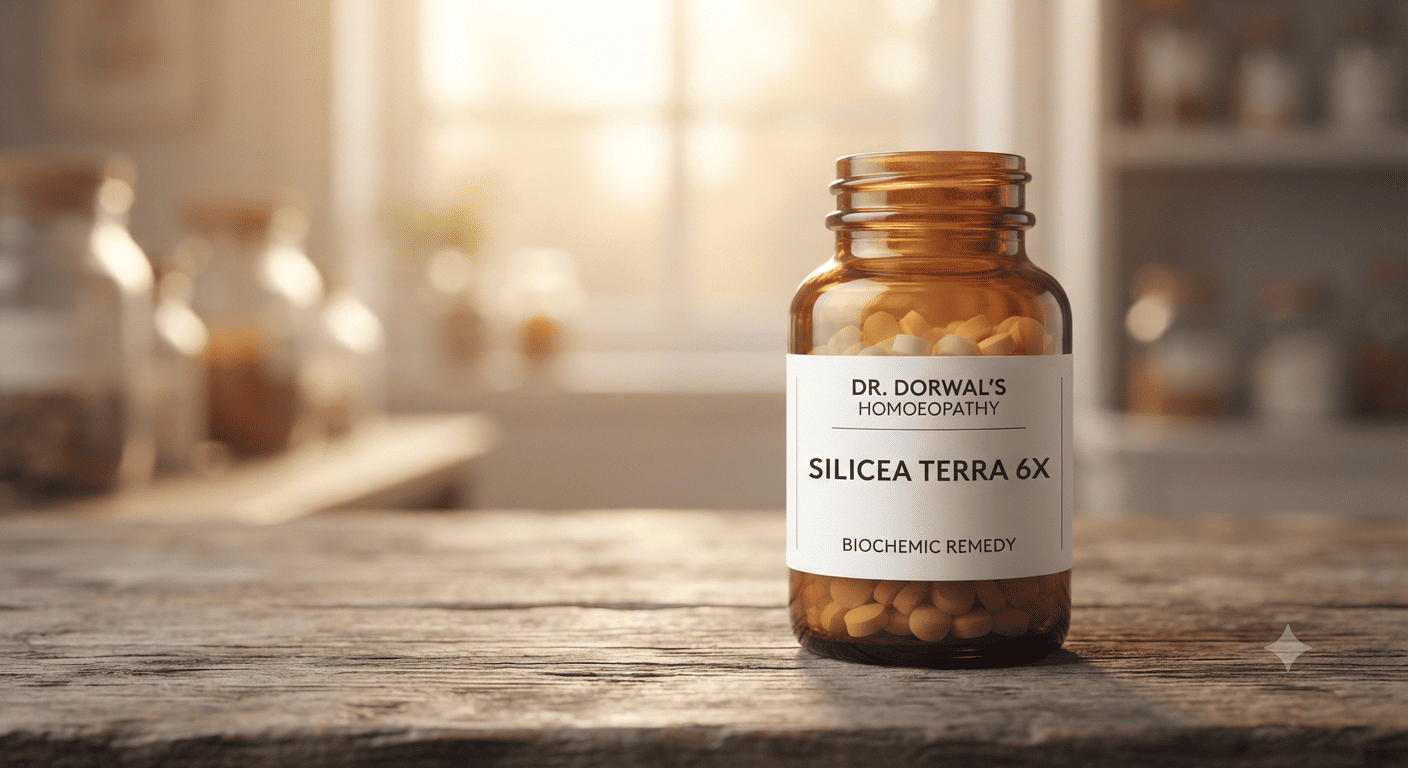
Silicea Terra, or pure flint, is a foundational “polychrest” remedy in homoeopathic medicine, deeply involved in the processes of nutrition, assimilation, and structural integrity. It is particularly renowned for its profound action on the connective tissues, bones, and the body’s suppurative processes.
Key Clinical Indications
Silicea is indicated for a wide range of pathological states, particularly those characterized by slow, deep-seated, or chronic progression:
- Suppurative Processes: Silicea is a primary remedy for ailments attended by pus formation. It is indicated for abscesses, boils, felons, fistulous burrowings, and old ulcers. It promotes the ripening of abscesses and the expulsion of foreign bodies from the tissues.
- Defective Nutrition & Growth: It is useful in scrofulous or rachitic children who are slow in walking and present with a large head, open fontanelles, and a distended abdomen. This stems from imperfect assimilation and defective nutrition.
- Nervous System & Mind: It addresses neurasthenic states, nervous excitability, and brain-fag. Patients may exhibit a yielding, faint-hearted, or anxious disposition.
- Bone & Structural Health: It is indicated for diseases of the bones, including caries and necrosis. It is also employed for spinal irritation and conditions like Potts’ disease. Furthermore, Silicea can stimulate the body to reabsorb fibrotic conditions and scar tissue.
- Thermal Sensitivity: The Silicea patient is characteristically chilly, lacks vital heat, hates drafts, and is extremely sensitive to taking cold.
Administration & Therapeutic Modalities
- Modalities: Symptoms are characteristically worse from washing, during the new moon, in the morning, during menses, from uncovering, lying down, and from damp cold. They are typically better from warmth, wrapping up the head, and in wet or humid weather.
- Dosage: Clinical use typically ranges from the 6X to the 30C potency. On other hand, 200C and higher potencies also demonstrate significant activity. In malignant affections, lower potencies may be required.
Dr. Dorwal’s Perspective
In my clinical practice, Silicea is my go-to remedy for the “delicate” patient—the one who is physically and mentally sensitive, easily overwhelmed, and prone to chronic, sluggish recovery. When I encounter stubborn suppurative processes, fistulas that refuse to heal, or an individual who simply cannot “assimilate” the nourishment or experiences of life, Silicea acts as a deep-acting catalyst. It gently assists the body in purging what is stagnant—whether that be pus, scar tissue, or foreign bodies—and helps rebuild the constitutional strength that was previously lacking. It is a slow-acting but deeply transformative remedy that demands patience and precision.
Disclaimer: This content is for informational purposes only. Homoeopathic medicines should be taken under the guidance of a qualified homoeopathic physician. Do not self-medicate for chronic or serious medical conditions, and always seek professional advice for any health concerns.
Frequently Asked Questions (FAQs)
It is frequently referred to by this nickname because of its remarkable ability to promote the expulsion of foreign bodies (such as splinters or thorns) and assist in the management of chronic abscesses and fistulous tracts.
Yes, it is indicated for a variety of skin conditions including boils, abscesses, keloid growths, and indurated tumors, especially where suppuration is long-lasting.
The Silicea patient is often yielding, faint-hearted, and anxious, with a tendency toward nervous excitability and a feeling of “want of grit” in both a moral and physical sense.
Absolutely. It is one of the most prominent remedies for patients who have a great sensitiveness to taking cold and a lack of vital heat, requiring them to constantly seek warmth.
