
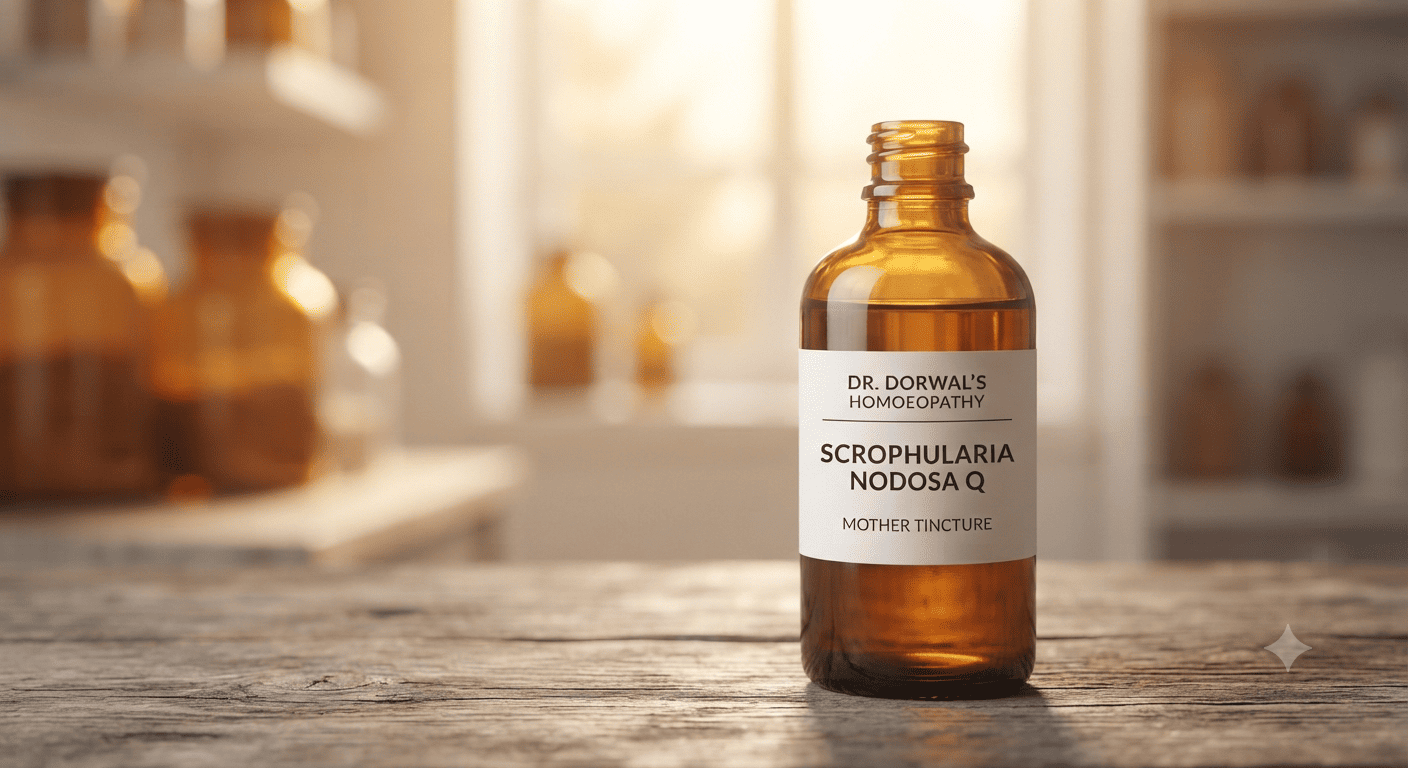
Scrophularia Nodosa, commonly known as Knotted Figwort, is a potent homoeopathic remedy recognized for its profound influence on glandular and integumentary (skin) systems. It is particularly noted for its affinity for lymphatic and mammary tissues.
Key Clinical Indications & Uses
Scrophularia Nodosa is indicated for a range of constitutional and localized pathologies, with a particular emphasis on glandular involvement:
- Glandular Affections: It is a powerful medicine whenever enlarged glands are present. It is utilized in cases of Hodgkin’s disease and scrofulous swellings.
- Mammary Health: The remedy has a specific affinity for the breast and is highly useful in the dissipation of breast tumors and breast nodosities.
- Skin & Surface Conditions: It serves as a valuable skin remedy, indicated for eczema (particularly behind or around the ears), lupoid ulceration, and epithelioma.
- Painful Affections: It is indicated for painful haemorrhoids (piles) that may be bleeding and protruding, and for painful conditions involving the flexor muscles.
- Other Systems:
- Eyes/Ears: Indicated for distressing photophobia and inflammation or ulceration about the auricle.
- Respiratory: Used for violent dyspnoea, chest oppression with trembling, and asthma in scrofulous patients.
- Abdomen: Addresses pain in the liver, colic, and pain in the sigmoid flexure and rectum.
Administration & Therapeutic Modalities
- Dose Selection: Clinical literature recommends the Mother tincture (Q) and the 1X potency.
- External Use: It may be applied locally to cancerous glands.
- Modalities: Symptoms are characteristically worse when lying on the right side.
Dr. Dorwal’s Perspective
In the study of homoeopathic literature, Scrophularia Nodosa stands out as a unique remedy for its targeted action on glandular enlargements and mammary growths. While I do not utilize this medicine in my own clinical practice, its reputation as a “powerful medicine” for Hodgkin’s disease and its specific affinity for breast tumors make it a significant subject for academic consideration. The remedy’s breadth—covering everything from eczematous conditions of the ear to respiratory distress—highlights the diverse applications of the Scrophularia family in managing complex, scrofulous constitutions.
Disclaimer: This content is for informational purposes only. Homoeopathic medicines should be taken under the guidance of a qualified homoeopathic physician. Do not self-medicate for chronic or serious medical conditions, and always seek professional advice for any health concerns.
Frequently Asked Questions (FAQs)
It is primarily used for the treatment of enlarged glands and is considered a valuable remedy for skin conditions and breast tumors.
It is specifically utilized for the dissipation of breast tumors and breast nodosities.
The clinical symptoms are notably worse when lying on the right side.
Literature suggests the use of the tincture (Q) or the 1X potency, with local application for cancerous glands.
