
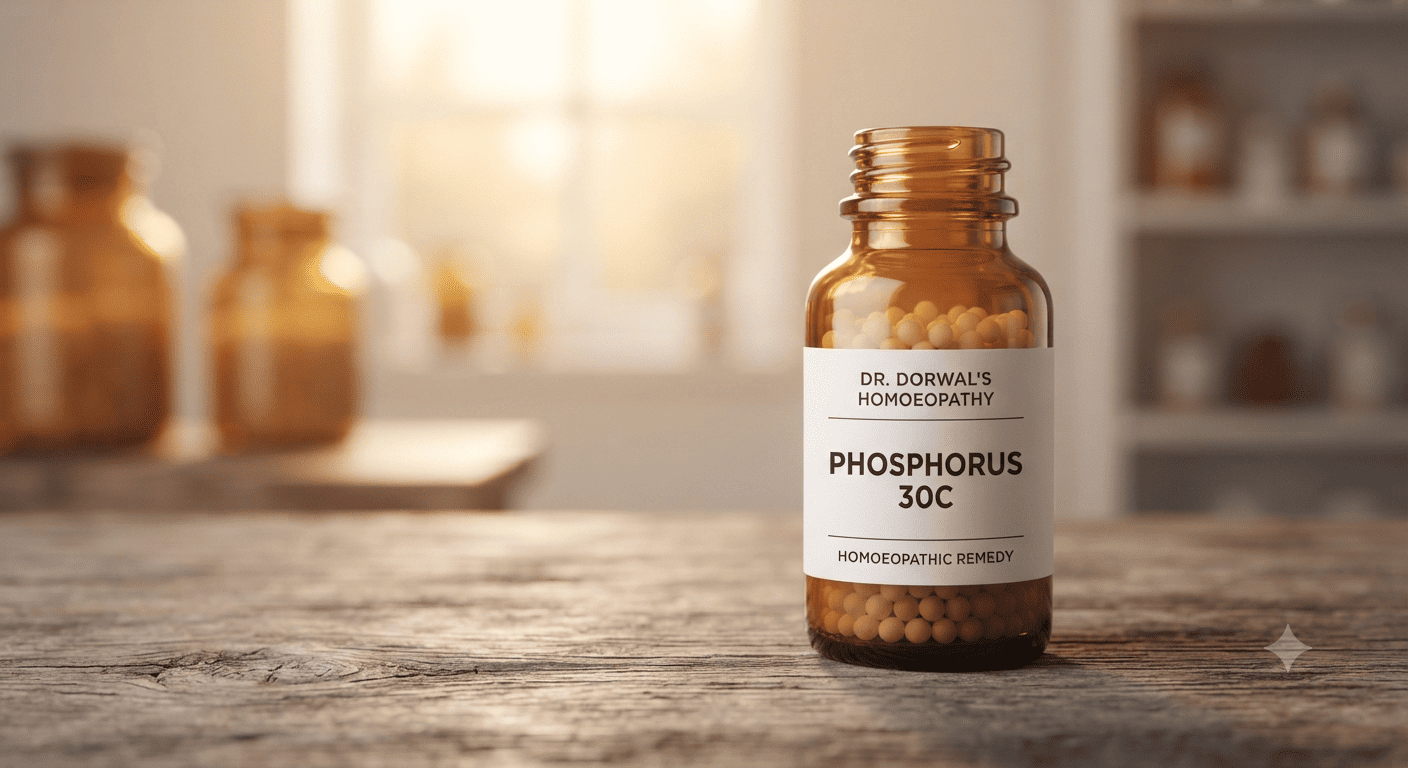
Phosphorus is a profoundly deep-acting homoeopathic remedy characterized by its systemic impact on mucous and serous membranes, nerves, bone structures, and the blood itself. It is indicated for states of destructive metabolism, often presenting in tall, slender, and narrow-chested individuals who are susceptible to external impressions and mental or physical exhaustion.
Key Clinical Indications & Uses
Phosphorus is utilized when the patient exhibits symptoms of physiological degeneration and extreme sensitivity:
- Constitutional Profile: It is particularly suited to tall, slender persons with thin, transparent skin who are weakened by the loss of vital fluids and experience great nervous debility.
- Respiratory System: The remedy is highly indicated for inflammatory conditions of the respiratory tract, pneumonia with oppression, and tuberculosis, especially in rapidly growing young people. It addresses racking, dry, and tight coughs triggered by tickling in the throat or cold air.
- Haemorrhagic Tendencies: Phosphorus is a primary consideration for various haemorrhagic states, including epistaxis (nosebleeds) in place of menses, haemoptysis, and wounds that bleed easily and excessively.
- Gastrointestinal & Metabolic Disturbances: It addresses symptoms like vomiting of ingesta, sour eructations, and a sensation of weakness or emptiness in the abdominal cavity. It is also indicated in cases of jaundice and liver congestion.
- Neurological & Psychological States: The remedy manages states of mental debility, fearfulness—particularly when alone—and over-sensitivity to light, sound, and odors. It is also employed for paralytic symptoms and post-diphtheritic paralysis.
- Bone & Tissue Health: It is indicated for bone fragility, necrosis (particularly of the lower jaw and tibia), and osteomyelitis.
Administration & Therapeutic Modalities
- Dose Selection: In clinical practice, 30C potency and higher are utilized.
- Modalities: Symptoms are generally worse from physical or mental exertion, twilight, warm food/drink, lying on the left side, or during thunderstorms. Patients typically feel better in the dark, lying on the right side, consuming cold food/drinks, or from open air and washing with cold water.
Dr. Dorwal’s Perspective
In my clinical experience, Phosphorus is an indispensable remedy for the “sensitive” patient—the individual who is not only physically tall and slender but also mentally porous, easily vexed, and overwhelmed by their environment. I find it most effective when the patient presents with sudden, prostrating symptoms or a combination of burning pains and haemorrhagic tendencies. Whether managing a racking cough in a growing teenager or addressing the nervous exhaustion that often follows periods of intense stress, Phosphorus serves as a powerful restorative.
Disclaimer: This content is for informational purposes only. Homoeopathic medicines should be taken under the guidance of a qualified homoeopathic physician. Do not self-medicate for chronic or serious medical conditions, and always seek professional advice for any health concerns.
Frequently Asked Questions (FAQs)
The typical patient is often tall, slender, narrow-chested, and possesses thin, transparent skin. They are characterized by great nervous debility and are easily influenced by external impressions.
It is used for hoarseness, larynx pain, and tight, racking coughs that are aggravated by cold air, talking, or laughing. It is also a significant remedy for pneumonia and tuberculosis.
It should not be given in too low a potency or too frequently in these cases, as it may hasten the destructive degeneration of tubercular masses.
Patients are generally worse lying on the left side and feel better lying on the right side.
