
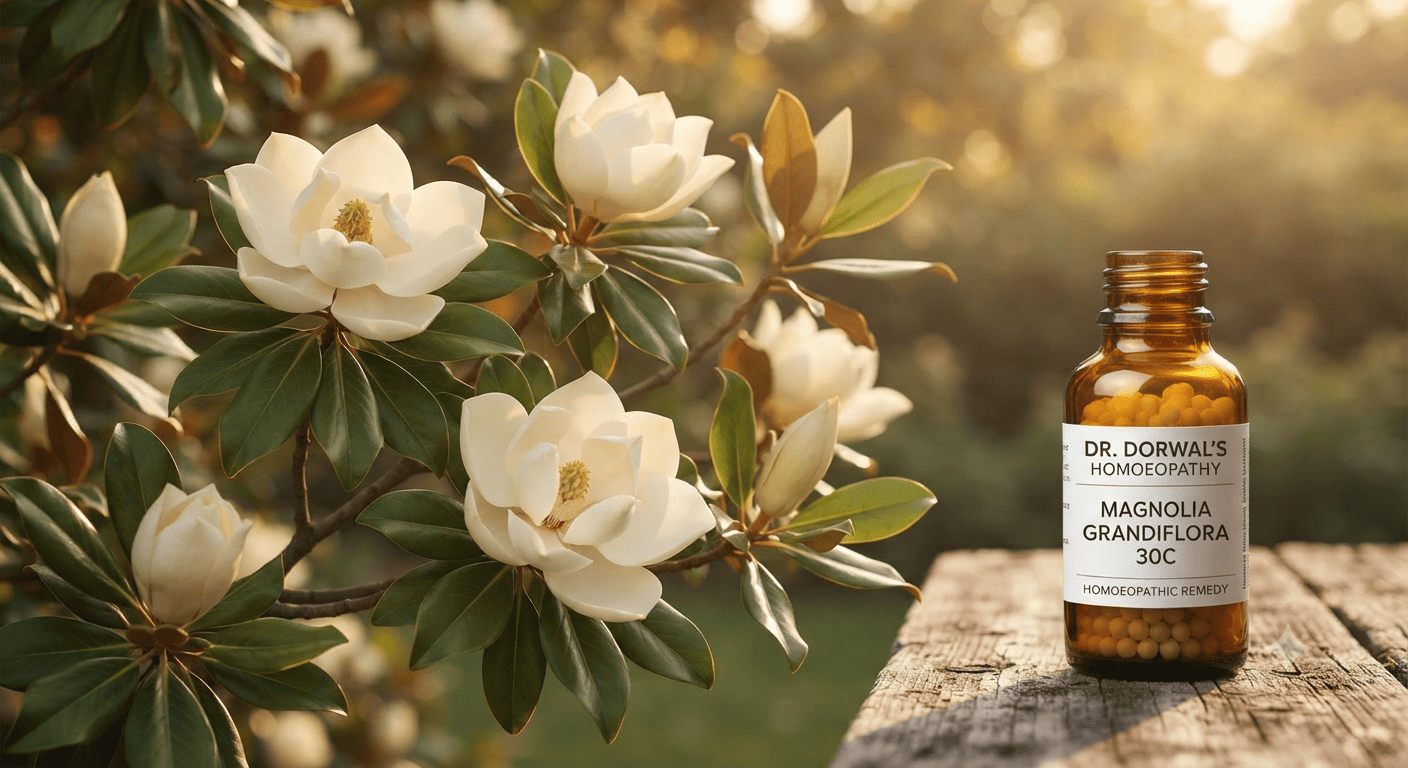
Magnolia Grandiflora is a unique remedy in the homoeopathic pharmacopoeia, often distinguished by its affinity for the cardiovascular system and the musculoskeletal framework. Rather than acting as a general tonic, it serves as a specialized intervention for individuals suffering from deep-seated stiffness, erratic rheumatic pains, and specific sensations of chest oppression or cardiac distress. It is an essential remedy for those whose vitality is hindered by a persistent feeling of soreness and internal constraint.
Key Benefits & Uses
Magnolia Grandiflora is primarily indicated for states characterized by localized rigidity and erratic shifting pains:
- Cardiac Support: It is frequently utilized for feelings of chest oppression where the patient struggles to expand the lungs. It is indicated for sensations of suffocation, particularly when walking fast or lying on the left side. It may assist in managing crampy pains in the heart and feelings of fainting or a sensation as if the heart has briefly stopped beating.
- Rheumatic & Joint Stiffness: This remedy excels in addressing stiffness and soreness, particularly in the joints. It is highly effective for “erratic” pains—discomfort that shifts or jumps from one location to another, commonly manifesting in the limbs or clavicles.
- The “Quiet” Soreness: A hallmark of Magnolia Grandiflora is the sensation of soreness that is aggravated when the body is at rest. The patient often feels stiff and tired, with symptoms frequently worsening in the morning upon first rising.
- Spleen & Heart Connection: It is uniquely indicated when there are alternating pains between the splenic region and the heart, often accompanied by a sensation of a “large bolus” of food causing distress in the stomach.
Administration & Therapeutic Modalities
- Potency Selection: Due to its specific action on cardiac and rheumatic tissues, this remedy is typically employed in lower potencies (such as the 30C potency) to gently support the body’s natural regulatory mechanisms.
- Clinical Modalities:
- Worse: Damp air, lying on the left side, and in the morning upon first rising.
- Better: Dry weather and gentle motion, which helps alleviate the stiffness associated with rest.
- Absorption: As with all homoeopathic remedies, ensure the mouth is clean and free from strong flavors for 20 minutes before or after administration to facilitate optimal sublingual absorption.
Dr. Dorwal’s Perspective
In my clinical experience, Magnolia Grandiflora is a targeted remedy for the patient who feels ‘locked’ by their symptoms. When a patient presents with chronic rheumatic stiffness that shifts erratically, or when they describe a distinct, heavy oppression in the chest that worsens with rest, I consider this remedy to help restore fluidity. It is particularly valuable for the patient who feels their vitality is being suppressed by physical discomfort—helping to transition them from a state of ‘stiff and sore’ to one of improved mobility and cardiac ease.
Disclaimer: This content is for informational purposes only. Homoeopathic medicines should be taken under the guidance of a qualified homoeopathic physician. Do not self-medicate for chronic or serious medical conditions, and always seek professional advice for any health concerns.
Frequently Asked Questions (FAQs)
It is not a conventional heart medication. In homeopathy, it is used to address the functional symptoms associated with cardiac distress—such as oppression, dyspnea (difficulty breathing), and sensations of fainting—by helping the body rebalance its own internal rhythm.
Magnolia Grandiflora has a specific affinity for “erratic” or wandering pains. When a patient reports that their pain moves unpredictably between the heart, spleen, or joints, this remedy is often selected to address the underlying nervous and systemic irritation causing that instability.
Yes. One of the primary indications for this remedy is stiffness that is most pronounced in the morning upon first rising. It works by reducing the inflammation and tissue sensitivity that contributes to that morning rigidity.
While homoeopathic dilutions are generally safe, Magnolia Grandiflora affects the cardiovascular and musculoskeletal systems. It is vital to consult with a qualified physician to ensure it is the correct match for your specific symptom profile and to determine the appropriate potency and frequency.
