
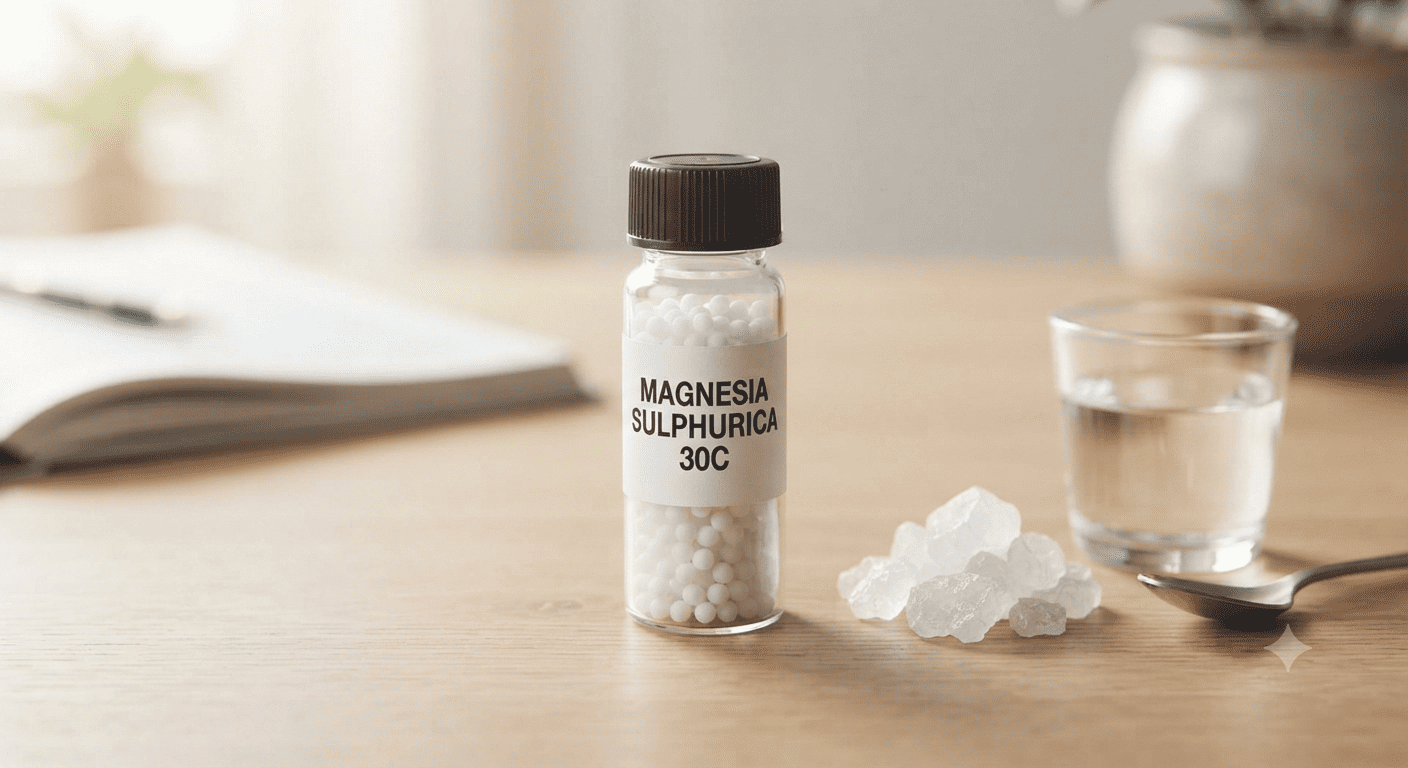
Magnesia Sulphurica, commonly known as Epsom Salt, occupies a unique place in the homoeopathic pharmacopoeia. While widely recognized in its crude form for its physiological effects, its homoeopathic preparation—achieved through rigorous attenuation—unveils a profound medicinal agent. It acts as a deep-acting remedy with a specific affinity for the skin, the urinary system, and female reproductive health, offering a balanced approach to complex internal disturbances.
Key Benefits & Uses
Magnesia Sulphurica is indicated for states where systemic functions require gentle rebalancing, particularly when symptoms point toward chronic congestion or irritation:
- Urinary Health & Metabolic Support: It is a vital remedy for urinary disturbances, characterized by burning sensations in the urethra and intermittent, dribbling streams. It is also historically considered in the management of diabetes and cases where urine becomes turbid with a copious red sediment.
- Female Reproductive Wellness: It addresses various uterine complaints, including thick, profuse leucorrhoea accompanied by weariness in the back and thighs. It is indicated for irregular, profuse, or early menses that may be thick and dark in character.
- Skin & Surface Irritations: The remedy is remarkably effective for chronic skin conditions, including outbreaks of small, intensely itching pimples across the body. It also has a supportive role in treating warts and addressing the after-effects of suppressed skin eruptions.
- Digestive & Hepatic Relief: It helps resolve digestive discomfort, specifically in cases involving frequent eructations that taste like “rotten eggs,” and provides support during hepatic or biliary colic.
- Musculoskeletal Comfort: It is indicated for intense, bruised, or ulcerative pain between the shoulders—often described as a sensation of a lump—and general soreness in the small of the back.
Administration & Therapeutic Modalities
- Potency Selection: While the pure salt is often used in physiological doses for its cathartic properties, its homoeopathic application for internal chronic conditions requires attenuation (from crude salt up to the 30C potency and beyond). Higher potencies should always be managed by a qualified physician.
- Absorption: Maintain a clean palate. To ensure optimal sublingual absorption, avoid consuming coffee, strong spices, or food for at least 20 minutes before or after taking the remedy.
- Complementary Application: Its use is highly individualized. In clinical settings, it is often utilized to augment other therapeutic protocols, such as enhancing the efficacy of conventional supportive treatments.
Dr. Dorwal’s Perspective
In my clinical practice, Magnesia Sulphurica is a remedy of remarkable versatility. I view it as a bridge between the physical and the constitutional. Whether I am addressing the “bruised” exhaustion of a patient struggling with chronic back pain or the specific irritation of a patient suffering from persistent urinary or skin complaints, this remedy works by normalizing the body’s internal fluid and metabolic balance. It is not merely a purgative; when used homoeopathically, it acts to clear the underlying systemic “sluggishness” that prevents a patient from returning to full health.
Disclaimer: This content is for informational purposes only. Homoeopathic medicines should be taken under the guidance of a qualified homoeopathic physician. Do not self-medicate for chronic or serious medical conditions, and always seek professional advice for any health concerns.
Frequently Asked Questions (FAQs)
No. While Epsom salt baths provide physiological relief for muscle aches and skin inflammation, the homeopathic remedy (Magnesia Sulphurica) is a highly diluted, potentized form intended to stimulate the body’s internal healing response for chronic conditions.
It is indicated for symptoms of irritation and burning in the urinary tract. It helps address functional disturbances like intermittent flow or specific sedimentary changes in the urine that indicate metabolic imbalance.
Yes, it is one of the indicated remedies in homoeopathy for the management of warts and chronic, itchy eruptions. However, constitutional analysis is necessary to determine if it is the correct match for your specific skin profile.
In homoeopathy, symptoms provide clues to the internal state. The specific taste of “rotten eggs” (hydrogen sulfide) is a clinical indicator for Magnesia Sulphurica, suggesting it can resolve specific types of digestive stagnation and metabolic waste buildup.
