
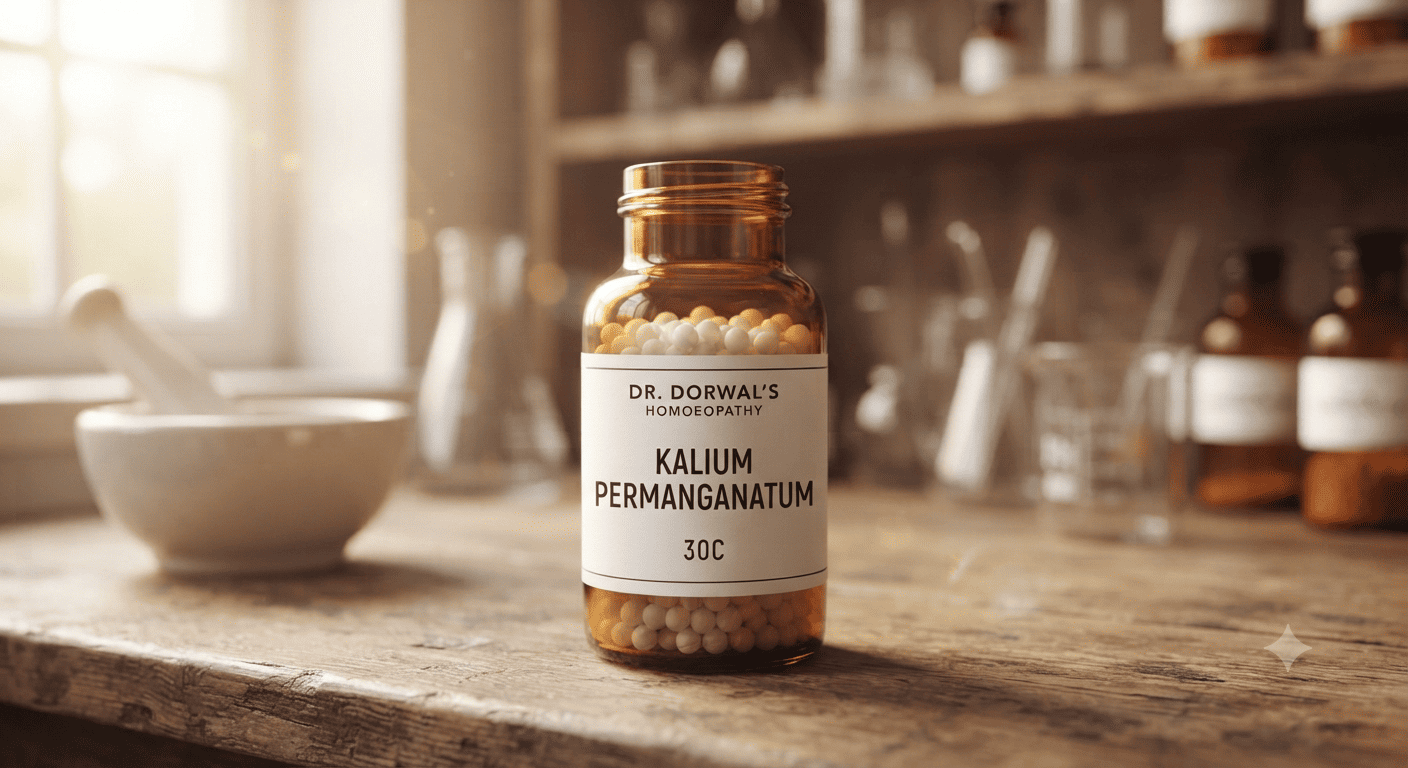
Kalium Permanganatum (Potassium Permanganate) occupies a vital, specialized position within the homoeopathic pharmacopoeia. Unlike remedies focused primarily on chronic nervous regulation, Kalium Permanganatum is highly regarded for its potent action on septic conditions, localized tissue inflammation, and aggressive irritations of the respiratory passages. It is particularly indicated when there is a marked tendency toward infiltration, ulceration, or sloughing of tissues, and it is historically recognized for its utility in managing acute, infectious-like states.
Key Benefits & Uses
Kalium Permanganatum addresses acute conditions characterized by intense irritation and potential decomposition:
- Respiratory & Throat Irritation: It is a primary remedy for acute, intense irritation affecting the nose, throat, and larynx. It is indicated for conditions involving a raw sensation in the larynx, a short, hacking cough, and painful, swollen throat tissues.
- Septic Conditions: It is highly indicated for septic states where tissues are infiltrated and show a distinct tendency toward sloughing or decay.
- Nasal & Throat Affections: Useful for cases involving bleeding from the nose, offensive breath, and painful posterior nares. Everything hawked up is often streaked with blood, and the uvula is frequently swollen.
- Neutralization of Poisons: Historically, it has been utilized in the treatment of bites from serpents and other animal-derived poisons.
- Gynecological Support: It is indicated for certain cases of dysmenorrhoea (painful menstruation).
Administration & Therapeutic Modalities
- Clinical Application: Due to its powerful action on septic and inflammatory processes, this remedy is generally used in acute settings where local tissue destruction or rapid infection-like symptoms are present.
- Professional Oversight: Given its role in managing serious conditions like diphtheria or septic infiltration, it must be used strictly under the guidance of a qualified homeopathic physician.
- Dilution: As with all potent homoeopathic substances, appropriate dilution (Such as 30C or 200C) is key to ensuring therapeutic efficacy while maintaining safety.
Dr. Dorwal’s Perspective
In my clinical practice, I prioritize a cautious and evidence-based approach to the materia medica. While the literature speaks volumes about the efficacy of Kalium Permanganatum in managing septic states, tissue sloughing, and aggressive throat infections, I have not yet utilized this specific medicine in my personal practice. That said, the historical literature clearly identifies it as a powerful agent for states of decomposition and intense, smarting inflammation. As my practice evolves, I remain committed to exploring such potent remedies only when the clinical picture perfectly aligns with their profound ability to neutralize and restore.
Disclaimer: This content is for informational purposes only. Homoeopathic medicines should be taken under the guidance of a qualified homeopathic physician. Do not self-medicate for chronic or serious medical conditions, and always seek professional advice for any health concerns.
Frequently Asked Questions (FAQs)
It is primarily used for acute, intense irritations of the nose, throat, and larynx, as well as for septic conditions where tissues are swollen and prone to sloughing.
It is not for standard, mild sore throats. It is indicated for severe, aggressive cases involving swelling, offensive breath, and blood-streaked mucus that signify a more serious inflammatory process.
Historically, it has been recognized for its role in addressing complications arising from animal poisons and serpent bites, acting on the systemic toxicity of those injuries.
Because this remedy addresses serious conditions like septic infiltration and diphtheria, accurate assessment of the pathology and appropriate potency selection are critical to ensure safety and effective healing.
