
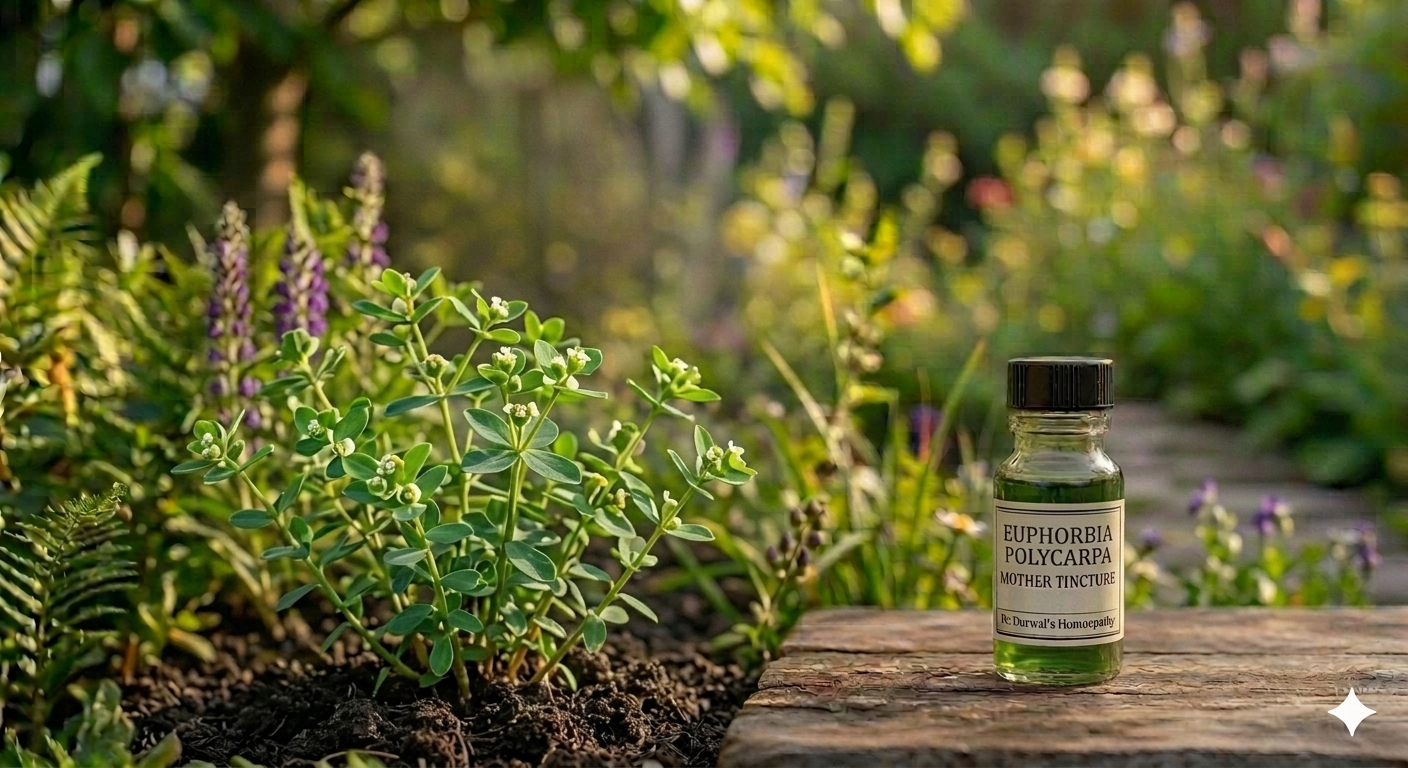
Euphorbia polycarpa, also known as “Golondrina,” is a plant belonging to the Euphorbiaceae family. In various traditional practices, it has been recognized for its potential therapeutic applications, particularly in its role as an antidote and a remedy for localized irritations.
Key Clinical Indications and Benefits
While Euphorbia species are generally known for their potent irritant properties, Euphorbia polycarpa is frequently noted in traditional herbalism for different applications:
- Antidotal Properties: It has historically been utilized as a traditional remedy for the bites of venomous creatures, such as snakes and spiders, reflecting its role as a specialized plant in regional ethnomedicine.
- Skin and Mucous Membranes: Like other members of its genus, it possesses properties that can affect skin integrity; however, it is specifically recognized for its traditional use in managing various dermatological irritations and surface wounds.
- Systemic Support: Traditional applications have often focused on its role in supporting the body’s reaction to toxic exposures, leveraging its properties to assist in neutralizing or alleviating the effects of external poisons.
Administration & Therapeutic Modalities
- Clinical Observation: The application of Euphorbia polycarpa is heavily rooted in traditional field medicine. Practitioners who incorporate it into broader therapeutic frameworks prioritize the observation of localized reactions—such as swelling, discoloration, or burning—following an exposure or bite.
- Cautionary Note: Due to the wide variance in the chemical constituents of Euphorbia species, and the inherent potential for extreme irritation from their milky latex, extreme caution is exercised regarding direct contact or ingestion.
- Potency & Dosage: For acute cases of poisoning, practitioners may administer the mother tincture (Q) both topically and internally, typically repeating the dose every 15 minutes.
Dr. Dorwal’s Perspective
In my practice, while I focus on established homoeopathic remedies, the study of traditional plants like Euphorbia polycarpa offers valuable insight into the broader pharmacological landscape. Although I have not yet utilized this remedy in my clinical practice, academic studies suggest it holds a reputation as an antidote in regional traditional medicine. This highlights the importance of understanding plant-based responses to acute, external toxicity. Any clinical consideration of such a remedy requires deep respect for its botanical complexity and the necessity of controlled, professional application.
Disclaimer: This content is for informational purposes only. Homoeopathic medicines and traditional plant remedies should be used under the guidance of a qualified healthcare professional. Do not self-medicate, and always seek professional advice for any health concerns or toxic exposures.
Frequently Asked Questions (FAQs)
It is widely referred to as “Golondrina”.
It has been traditionally utilized as a remedy for the bites of venomous creatures, including spiders and snakes.
No; like many Euphorbia species, it contains compounds that can be highly irritating, and it should only be used under expert supervision.
