
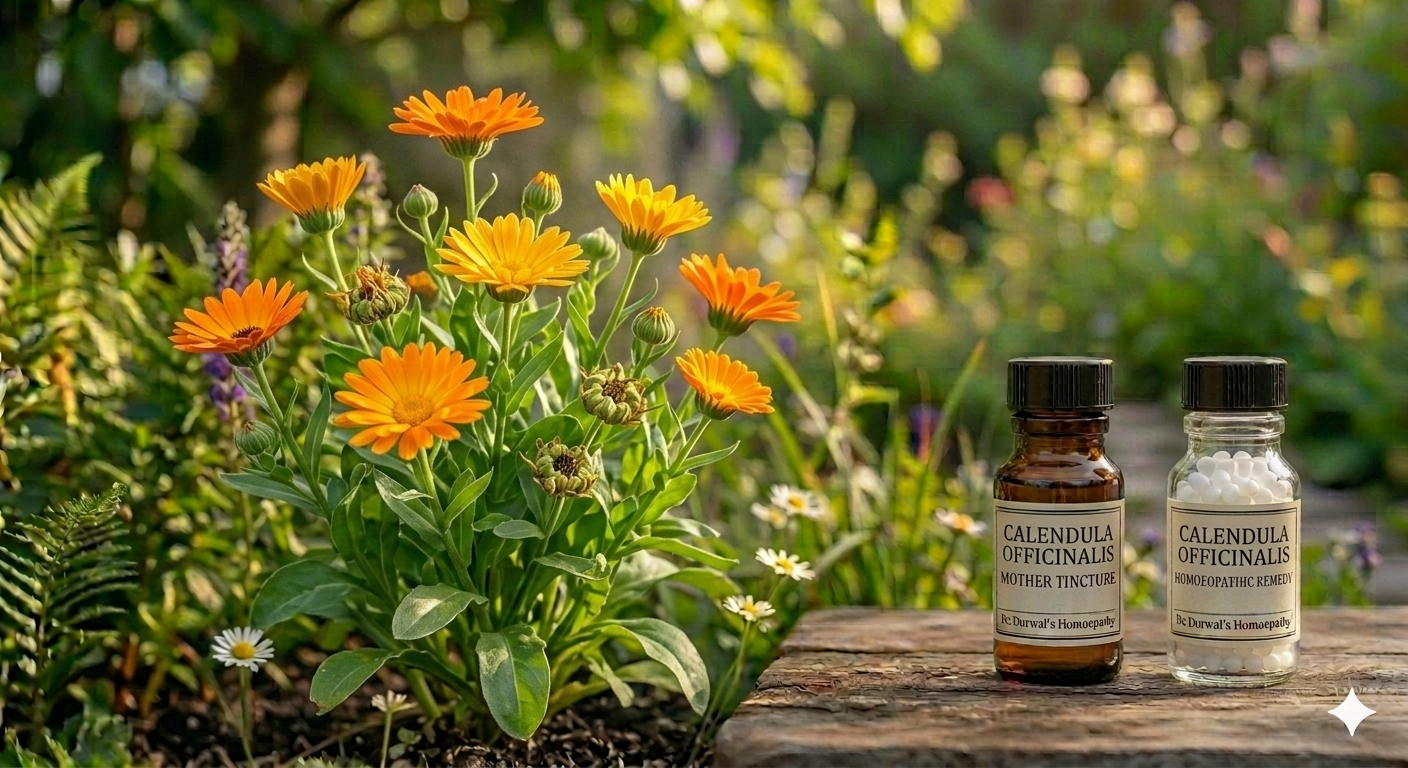
Calendula officinalis, derived from the marigold flower, is one of the most widely used and effective “vulnerary” remedies in homoeopathy. It is a cornerstone remedy for addressing external tissue damage and is frequently indicated as the “healer of wounds” for its unparalleled ability to promote healthy granulation and prevent suppuration.
Key Clinical Indications and Benefits
Calendula officinalis is highly valued for its regenerative therapeutic actions and is clinically indicated for several diagnosed conditions:
- Traumatic Injuries & Open Wounds: Primarily indicated for lacerated, ragged, or incised wounds that are slow to heal or prone to suppuration. Clinically, this makes it a primary remedy for Surgical Incisions, Lacerations, and Post-operative recovery.
- Skin & Integumentary Health: Excellent for preventing infection in broken skin and managing conditions where the skin is raw, inflamed, or prone to ulceration. It is frequently used in the clinical management of Burns (first and second degree), Scalds, Bedsores, and Diaper Rash.
- Post-Partum & Gynecological Healing: Effective in managing perineal tears, episiotomies, and sensitive mucous membranes. It is clinically prescribed for Post-cesarean recovery and Cervical Ectropion or vaginal inflammation to prevent septic conditions.
- Oral & Dental Recovery: Indicated for traumatic injuries to the mouth, such as after tooth extractions or surgical dental procedures, to soothe inflammation and facilitate rapid closure of the socket. It serves as a supportive treatment for Post-extraction Alveolitis (Dry Socket) and Gingival Inflammation.
- Mucous Membrane Affections: Highly useful for inflammatory conditions of internal tissues that have been exposed to trauma or infection. Clinically, it is indicated for Otitis Media (if the membrane is ruptured), Cystitis, and gastric ulcers with local irritation.
Administration & Therapeutic Modalities
- Potency & Dosage: Often used in lower potencies (Like 30C) and as a topical application in form of gel or lotion. The mother tincture (Q) is frequently diluted in distilled water for external irrigation of wounds or used as a sterile compress.
- Observation: As a healing agent, it is important to ensure that the wound remains clean and that healing is proceeding from the inside out, rather than closing the skin surface over an active infection.
Dr. Dorwal’s Perspective
In my clinical practice, Calendula officinalis is my “go-to” for any situation where tissue integrity has been compromised. Whether it is a post-surgical patient struggling with slow-healing sutures or a case of a nasty abrasion that refuses to close, Calendula acts as the body’s natural bridge to repair. I often tell my patients that while other remedies treat the internal “constitutional” imbalances, Calendula is the master of “physical repair.” It doesn’t just mask the injury; it signals the body’s cells to knit back together with minimal scarring. When treating surgical or accidental trauma, applying this remedy alongside internal administration often resolves issues that would otherwise lead to chronic sepsis or poor tissue union.
Disclaimer: This content is for informational purposes only. Homoeopathic medicines should be taken under the guidance of a qualified homoeopathic physician. Do not self-medicate for chronic or serious medical conditions, and always seek professional advice for any health concerns.
Frequently Asked Questions (FAQs)
It means the remedy is specifically selected for its ability to heal wounds, reduce inflammation, and prevent infection in damaged tissues.
Yes, it is one of the most trusted remedies for external use; however, it should be used in sterile, diluted forms as directed by a professional to ensure safety and hygiene.
It is widely used to assist in the healing of surgical incisions, helping to reduce the risk of secondary infections and promoting cleaner scarring.
Unlike remedies that focus on rashes or eruptions, Calendula is specifically oriented toward structural damage, such as cuts, scrapes, and burns where the skin barrier has been broken.
