
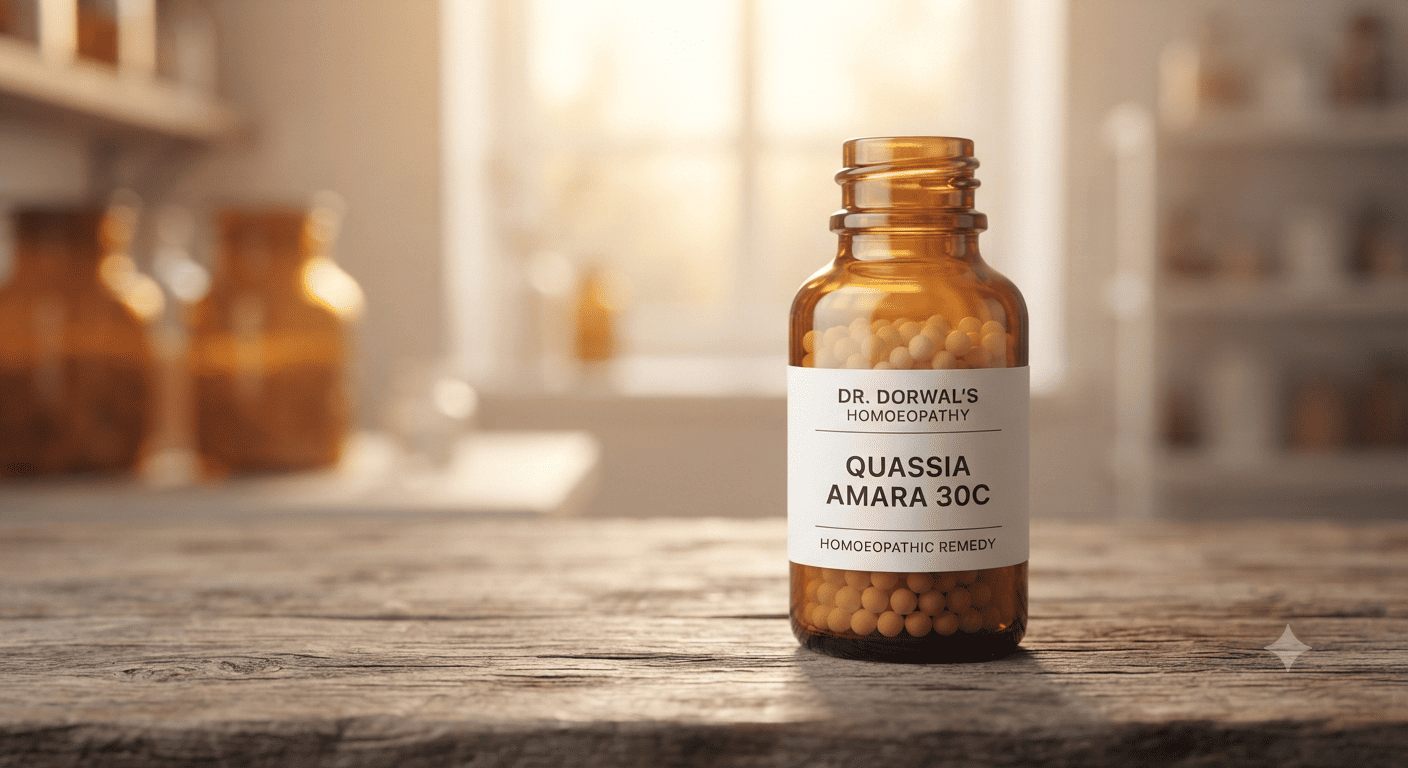
Quassia Amara, commonly known as Quassia-wood, serves as a vital component of the homoeopathic pharmacopeia, particularly for its tonic action on the digestive organs and its influence on urinary function. Its clinical application extends to managing metabolic disturbances following infectious illnesses and providing support for liver and splenic health.
Key Clinical Indications & Uses
Quassia Amara is indicated for clinical pictures where digestive weakness and urinary incontinence are prominent:
- Gastric & Digestive Support: The remedy acts as a powerful tonic for gastric organs. It is indicated for atonic dyspepsia characterized by gas, acidity, heartburn, and gastralgia. It is particularly useful for dyspepsia following infectious diseases, such as grip or dysentery. Patients may experience regurgitation of food and a sensation of an empty, retracted abdomen.
- Hepatic & Splenic Health: It addresses pain in the right intercostal muscles located above the liver. It is also indicated for pressure and stitches in the liver, with sympathetic involvement of the spleen. Additionally, it is used in managing cirrhosis of the liver accompanied by ascites.
- Urinary Function: Quassia is a highly indicated remedy for excessive and uncontrollable desire to urinate, resulting in copious micturition both day and night. It is particularly noted for cases of bedwetting (enuresis), where the child’s bed is drenched immediately upon waking.
- Ocular & Constitutional Effects: The remedy possesses a marked action on the eyes, potentially producing amblyopia and cataract. Constitutionally, patients may exhibit a sensation of coldness over the back, cold extremities with internal coldness, and profound prostration accompanied by hunger.
Administration & Therapeutic Modalities
- Dose Selection: In clinical practice 30C potency is generally utilized.
- Professional Guidance: As with all homoeopathic remedies, particularly those affecting liver and urinary function, Quassia Amara should be administered under the guidance of a qualified homeopathic physician to ensure safe and constitutional management.
Dr. Dorwal’s Perspective
In my clinical experience, Quassia Amara is an invaluable remedy when I encounter a patient suffering from the “leftovers” of an acute illness—specifically the lingering digestive atony that follows diseases like influenza or dysentery. It is my go-to tonic for the patient whose digestion has slowed to a halt, marked by persistent acidity and a feeling of emptiness. Beyond its gastric utility, I rely on Quassia for its distinct urinary efficacy; when a patient describes an inability to retain urine or a child presents with chronic nocturnal enuresis, this remedy often provides the necessary restorative support to normalize bladder control. Its dual action on the metabolic and urinary systems makes it a foundational choice in my practice.
Disclaimer: This content is for informational purposes only. Homoeopathic medicines should be taken under the guidance of a qualified homoeopathic physician. Do not self-medicate for chronic or serious medical conditions, and always seek professional advice for any health concerns.
Frequently Asked Questions (FAQs)
It is primarily used as a tonic for atonic dyspepsia, addressing symptoms like gas, acidity, and heartburn, especially after infectious illnesses.
Yes, it is indicated for cirrhosis of the liver with ascites, as well as pressure and stitches in the liver and spleen.
It addresses an uncontrollable, excessive desire to urinate (copious micturition) and nocturnal bedwetting in children.
It is typically administered from the first to the third potency, or in spoonful doses of Aqua Quassiae.
