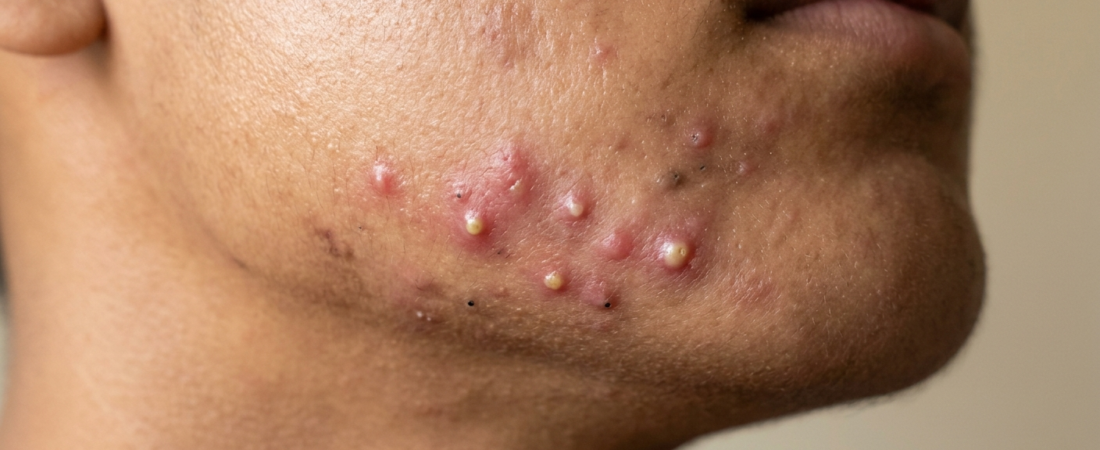
Acne vulgaris is a self limiting common inflammatory disorder found predominantly in adolescents in both sexes. Lesions are more commonly seen on the face, upper chest and upper back. Studies shows that acne vulgaris have lifetime prevalence of approximately 85% and is associated with puberty and psychological disturbances such as poor self image, depression, anxiety. In fact, these factors leads to a negative impact on the quality of the life. (1)
Acne vulgaris is an result of the over activity of the oil [sebaceous] glands in the skin that become plugged and inflamed. What happen? Hair follicles are blocked with the dead skin, bacteria, oil and keratin resulting into the formation of comedones. Further, these comedones may be present with black heads and white heads on the presence of the deposition of skin pigment melanin. In advance stages comedones infect and may results into the pustular acne. (2)
Signs and symptoms
Acne vulgaris shows mild to severe clinical features depending upon severity of the condition. Clinical features include
- Whiteheads, appears in closed plugged pores
- Blackheads, appears in open plugged pores
- Papule, is a small red bump
- Pustules, with pus at their tips
- Nodules or cystic lesions, are painful lumps beneath the skin
What causes acne vulgaris?
Several factors involve in the causation of the acne vulgaris. Causes include
- Hormonal changes – Studies shows that acne vulgaris occurs from the hypersensitivity of the sebaceous glands to the androgen’s. Androgen is a hormone produced by the adrenal gland of the host. Excessive secretion of the androgen hormones triggers the development of acne. In addition, GH, IGF-1, insulin, CRH and glucocorticoids are also associated with the development of the acne vulgaris. (3, 4)
- Medications – Long lasting intake of several medications such as lithium, steroids, and anticonvulsants may imbalance hormonal balance and cause acne vulgaris.
- Sunlight exposure – Some patients are hypersensitive to the UV rays of the sunlight and cause acne. Condition is worsen during the summer months and acne vulgaris aggravated by the exposure to the sunlight. (5)
- Endocrine disorders – Endocrine disorders such as polyendocrine Metabolic Ovarian Syndrome, cushing syndrome, Congenital adrenal hyperplasia, androgen-secreting tumors and acromegaly plays role in development of the acne vulgaris. (6)
Emotional stress, using of greasy cosmetics, menstruation in females, high humidity, genetics, dietary factors and many more can also cause acne vulgaris.
Classification of the acne vulgaris
Acne vulgaris is classified into four grades as
- Grade 1 – It includes comedones, either open or closed. Here, open comedones are developed due to plugging of the pilosebaceous opening by sebum on the skin surface, where as closed comedone is developed due to keratin and sebum plugging the pilosebaceous orifice below the skin surface.
- Grade 2 – It is typical course of pustular acne, where inflammatory lesions are present.
- Grade 3 – It is the chronic inflammatory acne grade, where pustules are formed.
- Grade 4 – It is most disastrous and advance stage which has maximum inflammation and pustules form nodules and cysts.
Risk factors
There are many factors that contributes in the development or increase in the risk of acne vulgaris. Risk factors include (7, 8)
- Age – Hormonal changes plays vital role in the development of acne vulgaris. If you’re at the age of puberty (age around 14-20), you have higher chances to develop acne vulgaris.
- Skin type – A person with oily, mixed and neutral skin in comparison with dry skin is at risk to develop acne vulgaris.
- Diet – Diet and nutrition affects overall health of an individual. Diet rich in the high glycemic index foods and fatty acids affects the sebaceous gland and increase the risk to develop acne vulgaris.
- Use of cosmatics – Use of the cosmatics such as creams and lotions leads to blockage of the hair follicles, which further leads to formation of the comedones.
Complications
Sometimes acne vulgaris may develops complications such as (9)
- Acne scar – Acne scars may develops if you pick or squeeze your spots. You may develop ice pick, rolling and boxcar scars. So, you need not to do such picking or scratching of spots.
- Post inflammatory hyper pigmentation – Sometimes, dark spots and pigmentation left behind after healing of an acne. In advance cases of acne vulgaris you have chances to develop post inflammatory hyper pigmentation in your skin.
- Depression – Many people suffers from the depression and anxiety due to cosmetic reasons and withdraw social links.
- Lack of self-esteem – Sometimes person thinks more about the condition and loose their self confidence. Person even feel badly about him/her self.
How acne vulgaris is diagnosed ?
Doctors diagnose acne vulgaris by the examining your skin. Doctor analyze your stage of the acne by appearance of the acne as comedones, pustular acne and nodules or cyst. In woman’s, sometimes doctors conduct ultrasounds scans and blood tests to confirm endocrine disorders such as polyendocrine Metabolic Ovarian Syndrome.
Management and treatment of the acne vulgaris
The management of acne vulgaris includes limitation of some foods such as high glycemic index foods, dairy products and oils that may cause or trigger the condition. Doctors use topical treatment, which may be used singly or in combination with systemic treatment. Topical agents include antibiotics, antiseptics and keratinolytic agents. In addition, regular washing of face with normal water may reduce the occurrence of condition. Doctors prefer soft cleaners., whereas antiseptic soaps are not so much useful because soaps enters into skin pores. On other hand, people moving toward holistic approaches to treat acne vulgaris, and choose homoeopathy and yogic exercises as first choice. (10)
Homoeopathy approach and medicines
Homoeopathy medications are found useful in the treatment of the acne vulgaris. Series of case studies suggested that there is success rate of more than 80% using individualized homoeopathy treatment. Doctors prescribe a single medicine based on the patient’s individual characteristic symptoms after perceiving symptomatology at physical, mental and emotional levels. In addition, studies shows that homoeopathic medicines not have any significant side effects. Doctors widely use following homoeopathy medicines to treat acne vulgaris. Medicines include (11)
- Sulphur – It is most often indicated medicine in this skin affection, especially if ailments are chronic. Skin of the patient is rough and hard, which produces heat and burning with itching. Acne vulgaris is associated with comedones and constipation. In addition, there is aggravation from water is the characteristic symptom leading to the medicine Sulphur in skin affections. Sulphur also indicated in cases where skin affections arises after local medications.
- Hepar sulphur – It is best suited medicine to the people with unhealthy skin. There is tenancy to suppuration, which is marked in Hepar sulphur. Lesions spread by the formation of small papules around the side of the old lesion. Acne are with bloody suppuration and smell like old cheese. In addition, acne are sensitive to touch, and there is burning and stinging pain in the papules. So, Hepar sulphur is an indicated medicine to treat cases of acne vulgaris.
- Calcarea sulphuricum – It is indicated medicine where pimples or pustules suppurate. In fact, medicine has a good action on suppurative processes after pus has found a vent. Discharges are yellow,thick and lumpy, where as pustules bleeds on the scratching.
- Kali bromatum – It is indicated in cases where acne vulgaris found on the face, neck and shoulders. It is especially indicated in the hyperaesthetic, nervous females. It is also useful medicine in sexual excesses and used in occurrence of acne vulgaris due to sexual excess. Dr. J.H. Clarke, one of pioneer of homoeopathy says that ‘I know of no remedy of such universal usefulness in cases of simple acne as Kali bromatum 30’. Today, it is widely used therapeutic medicine in cases acne vulgaris.
- Natrum muriaticum – It acts especially on the sebaceous glands and is a very helpful medicine in acne vulgaris. Skin is greasy oily and affects hair follicles. It can be used where excessive intake of salt causes nutritive disturbance and skin affections arises.
- Antimonium crudum – Medicine is indicated when patient comes with small red pimples on face, acne in drunkards with gastric derangement’s and with white coated tongue. Skin of the patient is thick hard and dry with pimples, vesicles and pustules.
- Sanguinaria – Medicine is especially suited to the women with scanty menses and irregular circulation of blood. There is burning and itching in the acne and condition is worse on the right side of the patient. Other homoeopathy medicines for acne with sexual disturbances are Calcarea carbonica and Aurum muriaticum.
- Silicea terra – The acne of medicine are delicate, pale and waxy looking, but pus is offensive and itching present in daytime and evening. Medicine is known for its action for the promotion of expulsion of foreign bodies from tissues. It is also useful in cases where there is long lasting suppuration and fistulous tracts. In fact, Silicea terra is one of the good medicine for suppuration along with Hepar sulphur.
Arsenicum bromatum, Aurum muriaticum, Calcarea carbonica, Calcarea picrata, Antimonium tartaricum, Berberis aquifolium, Pulsatilla, and many more homoeopathy medicines can also helps to treat acne vulgaris with indications of their own peculiar symptomatology.
Conclusion
Acne vulgaris is a self limiting leading disorder in age of adolescence. Acne mostly observed on the face, back, shoulder and chest. In most of the cases disease condition is resolved by its self due to hormonal changes at time of puberty. Nowadays, globally this disorder is a cosmetic issue, which sometimes leads to the anxiety and depression in younger ones. Peoples are in search of treatment with least number of side effects and homoeopathy medicines solve their problem. In fact, you may choose homoeopathy for your adolescence disorders including acne vulgaris. Homoeopathy is gentle, safe and resolve your ailments holistically. Evidence based studies shows that choosing classical homoeopathy approach, where doctors prescribe single remedy is effective and treated more than 80% cases of acne vulgaris without any side effects, where sometimes conventional treatment leads to number of side effects and your condition become worse. Dr. Dorwal offers holistic treatment including suggestion of homoeopathy medicines, yogic exercises and dietary changes that may resolve your health concern without any side effects. You may consult with Dr. Dorwal through chat on whatsapp and by leaving a message on consultation form after giving consent to privacy policy.