
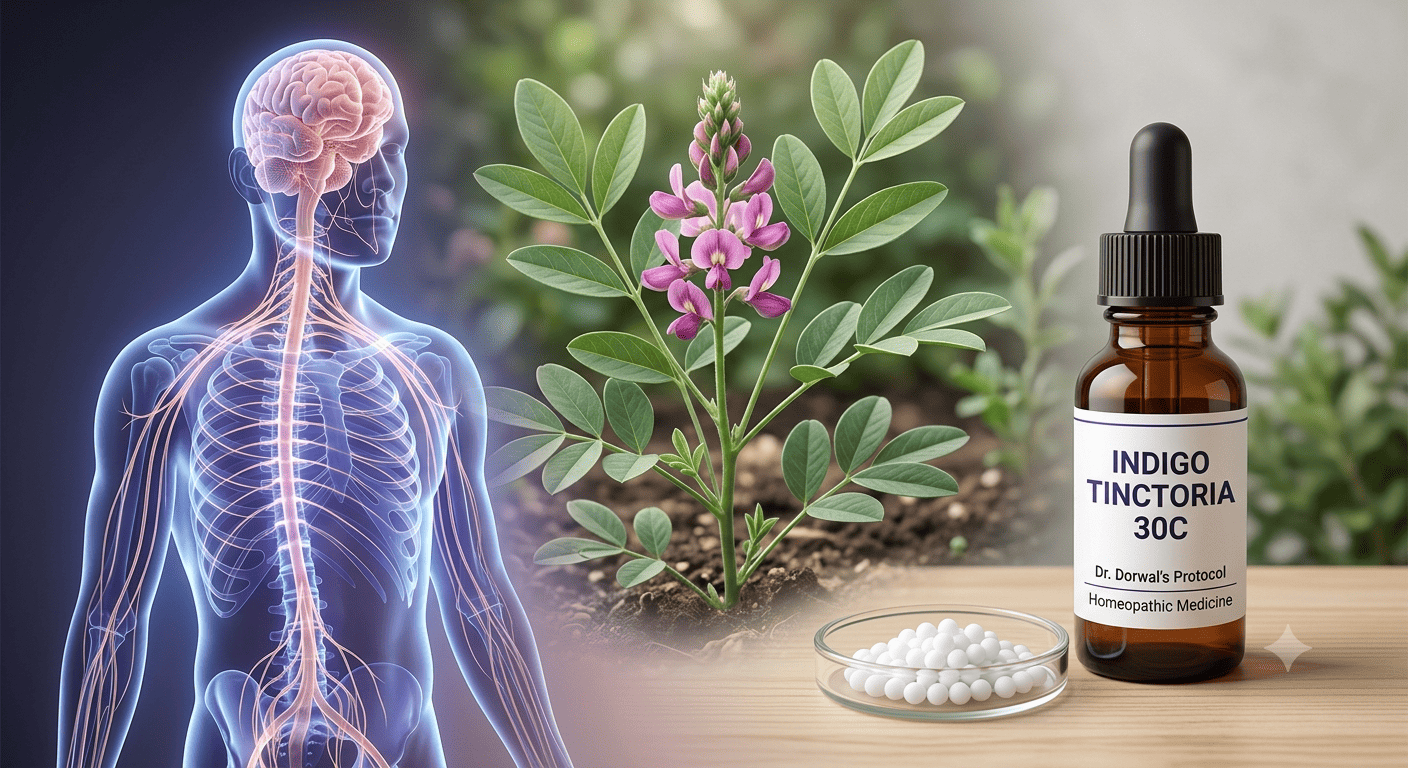
Indigo Tinctoria, derived from the indigo dye-stuff, is a significant homoeopathic agent with a profound action on the nervous system. It is particularly noted for its efficacy in managing nervous exhaustion, hysterical states, and specific spasmodic conditions.
Clinical Indications & Benefits
In clinical practice, Indigo Tinctoria is utilized for several specific scenarios:
- Epilepsy & Convulsive Disorders: It is a recognized remedy for epilepsy, particularly when the condition is associated with profound sadness, dizziness, or an aura originating from a painful spot between the shoulders. It is also indicated for reflex spasms, such as those triggered by intestinal worms.
- Neurasthenia & Hysteria: Highly indicated for hysterical symptoms dominated by pain, extreme nervous irritation, and an excited mood accompanied by a restless desire to be busy.
- Sciatica & Neuralgic Pain: Clinically useful for sciatic pain extending from the middle of the thigh to the knee, as well as boring pains in the knee joint that are characteristically relieved by walking.
- Gastrointestinal & Urogenital Support: Indicated for conditions including falling of the rectum, nocturnal anal itching, and catarrh of the bladder accompanied by a constant desire to urinate and turbid urine.
- Cephalalgia: Prescribed for headaches featuring a sensation of a band around the forehead or a “frozen” feeling in the brain, often accompanied by vertigo and nausea.
Administration & Therapeutic Modalities
- Potency & Dosage: Practitioners typically employ potencies ranging from the 30C to the 200C.
- Clinical Observation: The hallmark of Indigo Tinctoria is its relationship with rest and movement. Patients often experience an aggravation of symptoms—such as limb pain—during rest and sitting, while finding significant relief through pressure, rubbing, or physical motion.
Dr. Dorwal’s Perspective
In my clinical practice, I view Indigo Tinctoria as a specialized instrument for patients suffering from intense nervous hyper-excitability. I have observed that it is particularly valuable for those whose physical symptoms, such as sciatic or joint pains, exhibit a clear “rest-aggravation” pattern. By addressing the underlying nervous irritation, this remedy helps stabilize patients struggling with convulsive tendencies or profound emotional disturbances. It serves as an important differential in my protocol for cases where nervous instability and localized neuralgic pain coexist, helping to restore both physiological and emotional balance.
Disclaimer: This content is for informational purposes only. Homoeopathic medicines should be taken under the guidance of a qualified homeopathic physician. Do not self-medicate for chronic or serious medical conditions, and always seek professional advice for any health concerns.
Frequently Asked Questions (FAQs)
It is primarily used for the treatment of epilepsy, especially when accompanied by great sadness, and for managing hysteria and nervous irritation.
A hallmark of this remedy is that symptoms, particularly limb pain, are worse during rest and sitting, but improve with motion, pressure, or rubbing.
Yes, it is indicated for sciatica characterized by pain from the middle of the thigh to the knee and boring pains in the knee joint.
Yes, it is indicated for catarrh of the bladder, presenting with a constant desire to urinate and turbid urine.
