
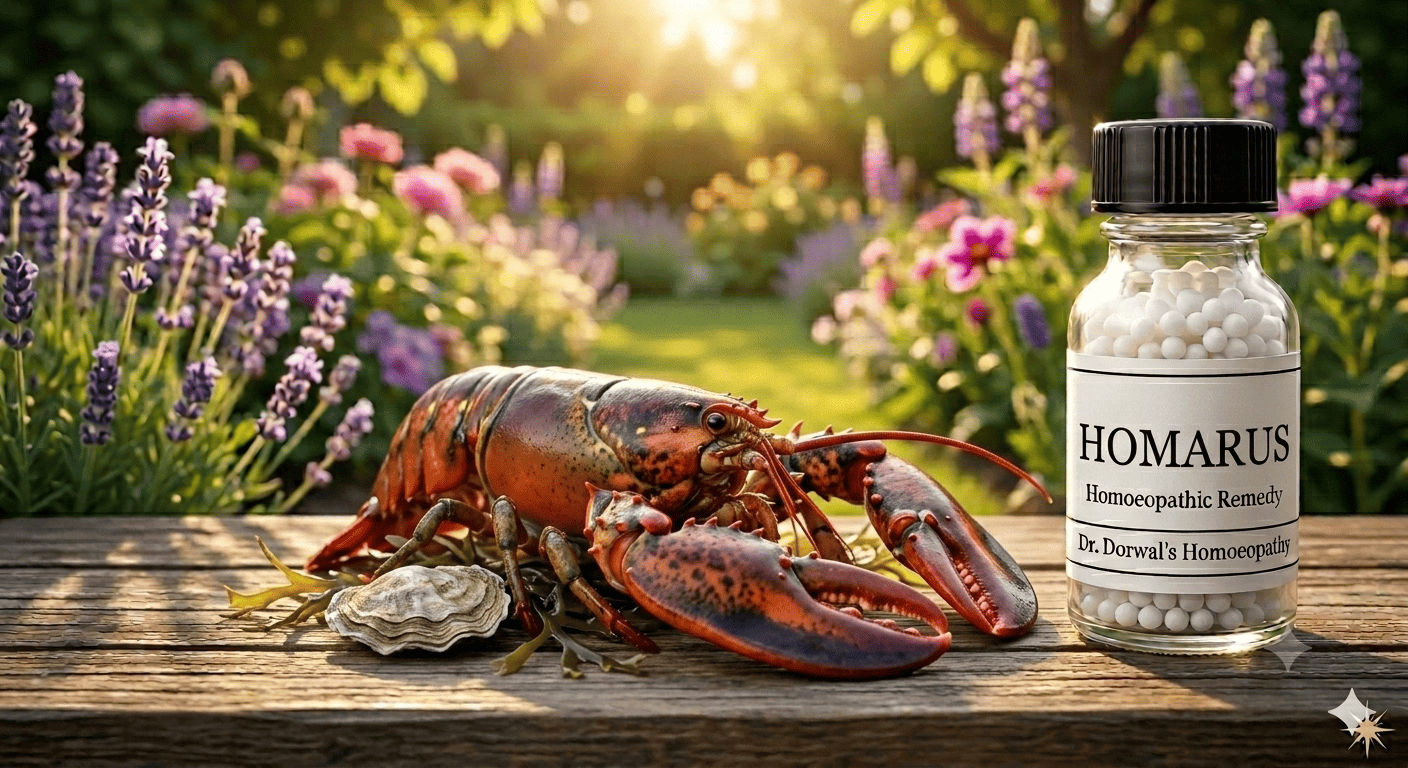
Homarus, derived from the American Lobster, is a homoeopathic remedy recognized for its specific influence on the gastrointestinal tract, liver, and dermatological system. This remedy is characterized by a distinct pattern of symptoms that mimic certain hepatic and gastric disturbances.
Clinical Indications & Benefits
In clinical practice, Homarus is utilized for the following symptomatic patterns and diagnostic conditions:
- Gastrointestinal & Hepatic Affections: Primarily indicated for nausea and vomiting associated with hepatic congestion or portal stasis. It is often employed in cases of a “heavy” or “sore” sensation in the region of the liver, frequently accompanied by an aversion to food, particularly when the patient feels a sense of fullness.
- Gastric Irritation: Clinically applied for acid indigestion, burning sensations in the stomach, and a general feeling of malaise after eating, often linked to hepatic dysfunction.
- Dermatological Manifestations: Indicated for skin conditions characterized by itching, burning, and redness. It is specifically useful in cases where skin eruptions appear to have a connection to underlying gastric or liver disturbances.
- General Malaise: Utilized for symptoms of general weariness, a “dull” headache, and a sensation of being “bilious,” particularly when these symptoms occur in conjunction with digestive distress.
Administration & Therapeutic Modalities
- Potency & Dosage: Practitioners typically employ lower potencies (such as 30C), tailoring the frequency of dosage based on the acuteness of the digestive symptoms and the patient’s sensitivity.
- Clinical Observation: The hallmark of Homarus is its specific relationship with liver-related digestive disturbances. Monitoring the patient for the characteristic modalities—worsening after eating and improvement through rest or digestive stabilization—is crucial in determining the appropriate therapeutic intervention.
Dr. Dorwal’s Perspective
In my clinical practice, I have not personally utilized Homarus; however, existing homoeopathic literature suggests it serves as a valuable tool for addressing the “bilious” state that often underlies complex digestive issues. I have observed that when a patient presents with chronic gastric irritability coupled with a sense of heaviness over the liver, this remedy is frequently referenced in the literature for its ability to address the congestion in the portal system. By targeting the intersection of liver function and gastric comfort, literature suggests that Homarus offers a strategic pathway for stabilizing patients who struggle with recurring indigestion and skin sensitivity.
Disclaimer: This content is for informational purposes only. Homoeopathic medicines should be taken under the guidance of a qualified homeopathic physician. Do not self-medicate for chronic or serious medical conditions, and always seek professional advice for any health concerns.
Frequently Asked Questions (FAQs)
Homarus is a homoeopathic preparation derived from the American Lobster.
Yes, it is highly regarded in homoeopathy for relieving nausea, hepatic congestion, and acid indigestion, particularly when associated with a feeling of fullness.
The hallmark is the presence of gastric distress worsening after eating, often accompanied by a sore or heavy sensation in the hepatic region.
Yes, it is indicated for skin eruptions characterized by itching and burning, especially when these eruptions appear linked to underlying gastric or liver disturbances. A qualified physician should assess your specific symptoms to determine if Homarus is the appropriate match.
