
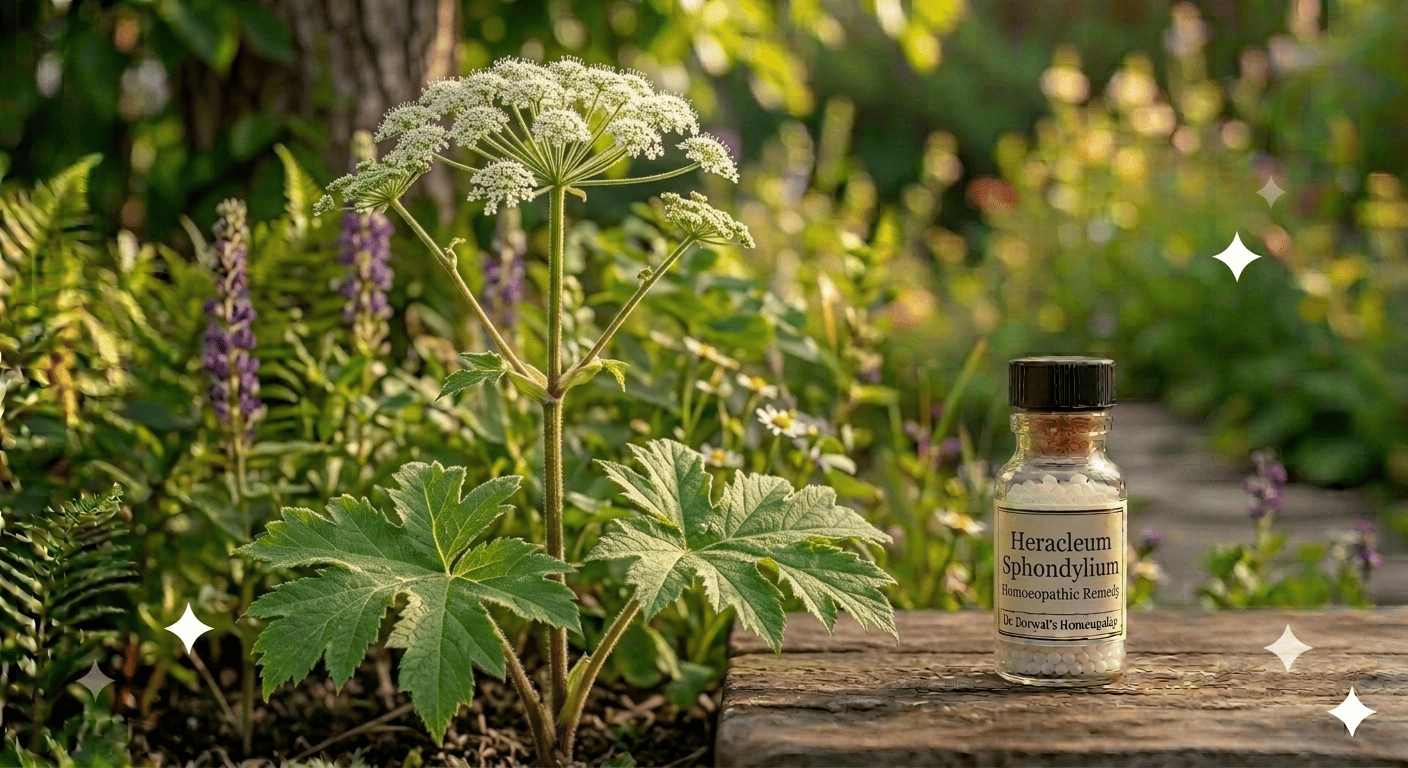
Heracleum Sphondylium, commonly known as Hogweed or Branca Ursina, is a specialized homoeopathic agent with a therapeutic focus on the neurological and gastrointestinal systems. Historically recognized in classical homoeopathic literature as a spinal stimulant, its clinical application extends to manage complex symptomatic presentations involving epilepsy, gouty diathesis, and dermatological conditions.
Clinical Indications & Benefits
In traditional homoeopathic practice, Heracleum Sphondylium is indicated for several distinct clinical scenarios:
- Neurological & Spinal Support: Often recommended as a spinal stimulant, particularly in cases involving epilepsy that are complicated by flatulence.
- Cephalic Symptoms: Indicated for headaches characterized by marked drowsiness.
- Symptoms often worsen when moving in the open air but find relief when the head is bound tightly with a cloth.
- Clinical use includes conditions such as seborrhoea capitis, sick headaches, and instances of violent itching or excessive fatty perspiration on the scalp.
- Gastrointestinal Disturbances: Employed for stomach-related pain accompanied by an inclination to vomit and bitter-tasting risings.
- It is indicated for patients who experience a sensation of hunger but find themselves unable to eat.
- It addresses discomfort localized to the abdomen and spleen.
- Systemic Conditions: Utilized in the management of gouty symptoms and associated skin manifestations.
Administration & Therapeutic Modalities
- Potency & Dosage: Established homoeopathic literature typically recommends the potency ( Such as 30C) for this remedy.
- Clinical Observation: Practitioners observe the patient’s response to the remedy’s specific neurological and gastric profile, particularly noting the relationship between the headache modalities and the patient’s digestive comfort.
Dr. Dorwal’s Perspective
In my clinical practice, I have not personally utilized Heracleum Sphondylium; however, classical homoeopathic literature suggests it serves as an intriguing agent for complex, multi-system cases. The literature highlights its potential in addressing the intersection of spinal irritation and digestive distress, which is a rare but challenging combination in chronic patient profiles. While my current protocols focus on other modalities, traditional references position Heracleum Sphondylium as a remedy for those specific instances where gouty tendencies and seborrhoea overlap with neurological symptoms like epilepsy. It remains a notable example of how homoeopathy seeks to address systemic imbalances through specific medicinal agents.
Disclaimer: This content is for informational purposes only. Homoeopathic medicines should be taken under the guidance of a qualified homeopathic physician. Do not self-medicate for chronic or serious medical conditions, and always seek professional advice for any health concerns.
Frequently Asked Questions (FAQs)
It is primarily used as a spinal stimulant, with applications for epilepsy (when accompanied by flatulence), gouty symptoms, and various skin conditions.
The headache is typically associated with drowsiness, worsens when moving in open air, and improves significantly when the head is tied up with a cloth.
It is indicated for abdominal and splenic pain, bitter taste, and a state of hunger where the patient is unable to consume food.
Yes, traditional texts indicate it for skin symptoms associated with gouty conditions; however, a qualified physician should assess your specific health profile to determine if this remedy is appropriate for you.
