
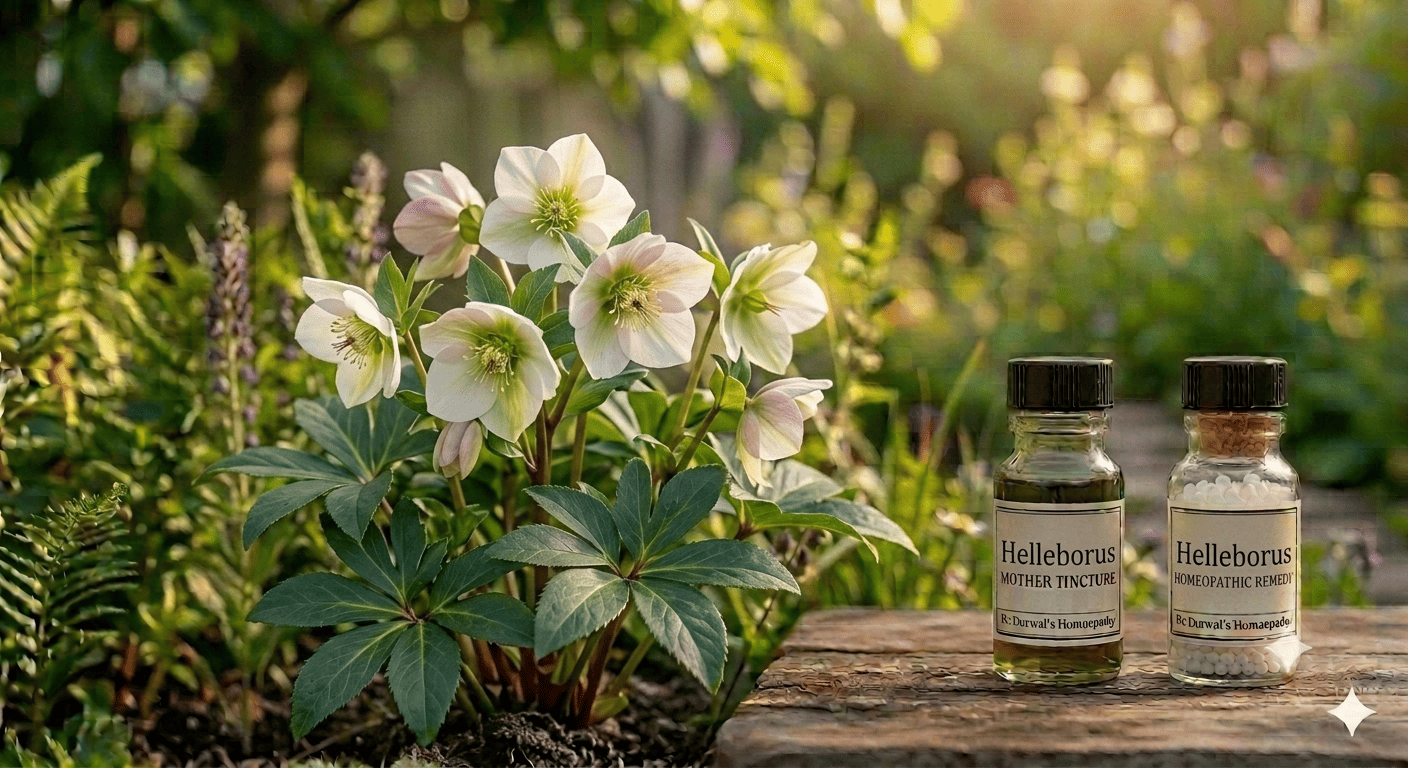
Helleborus Niger, known as the Snow-rose, is a profound homoeopathic agent indicated for states of severe vitality depletion and serious pathological conditions. It is clinically renowned for its influence on the central nervous system and its capacity to manage dropsical effusions, making it a critical remedy in cases of systemic breakdown and sensorial depression.
Clinical Indications & Benefits
In clinical practice, Helleborus is utilized for several specific scenarios:
- Neurological & Sensorial Depression: Highly indicated for conditions marked by impaired senses (sight, hearing, taste) and profound muscular weakness, which can progress to paralysis.
- Hydrocephalus & Cerebral Affections: A primary remedy for states of effusion in hydrocephalus, characterized by the child boring their head into the pillow, rolling the head, moaning, and emitting sudden, piercing screams.
- Melancholic States & Mania: Indicated for a melancholy type of mania where the patient is slow to answer, appears thoughtless, and exhibits involuntary, repetitive behaviors like picking at lips or clothes.
- Gastrointestinal & Urinary Disturbances: Utilized for abdominal swelling with a sensation of gurgling water, jelly-like white stools, and suppressed or scanty urine characterized by a “coffee-grounds” sediment.
- Respiratory & Dropsical Conditions: Effectively addresses hydrothorax and respiratory irregularity with chest constriction. It is also indicated for sudden, watery swellings of the skin and angio-neurotic oedema.
Administration & Therapeutic Modalities
- Potency & Dosage: Practitioners typically employ ranges from the Mother tincture (Q) and potency (Such as 30C), depending on the severity of the pathology.
- Clinical Observation: The hallmark of Helleborus is the characteristic “sinking sensation” and the aggravation of symptoms from 4:00 PM to 8:00 PM, as well as an overall worsening from evening until morning and from uncovering the body.
Dr. Dorwal’s Perspective
In my clinical practice, Helleborus stands out as an essential remedy for patients experiencing severe “low states of vitality.” I have observed that when a patient presents with a vacant, staring look and a profound inability to process sensory information, this remedy can be transformative. It is an indispensable tool in my protocol for serious, deep-seated diseases, particularly those involving fluid retention (dropsy) or significant neurological distress. By using Helleborus, I aim to counteract the systemic sensorial depression and stabilize the body’s internal water balance, providing relief in cases where the patient’s vitality has been severely compromised.
Disclaimer: This content is for informational purposes only. Homoeopathic medicines should be taken under the guidance of a qualified homeopathic physician. Do not self-medicate for chronic or serious medical conditions, and always seek professional advice for any health concerns.
Frequently Asked Questions (FAQs)
It is primarily used for serious conditions involving sensorial depression, low vitality, and the management of dropsical effusions.
Yes, it is highly regarded for its efficacy in hydrocephalus, specifically when accompanied by symptoms like screaming, head-boring, and vacant staring.
The hallmark is the aggravation of symptoms from 4:00 PM to 8:00 PM and an overall worsening from evening until morning or from uncovering the body.
It is indicated for suppressed or scanty urination, with a distinct “coffee-grounds” sediment and frequent but ineffective urging.
