
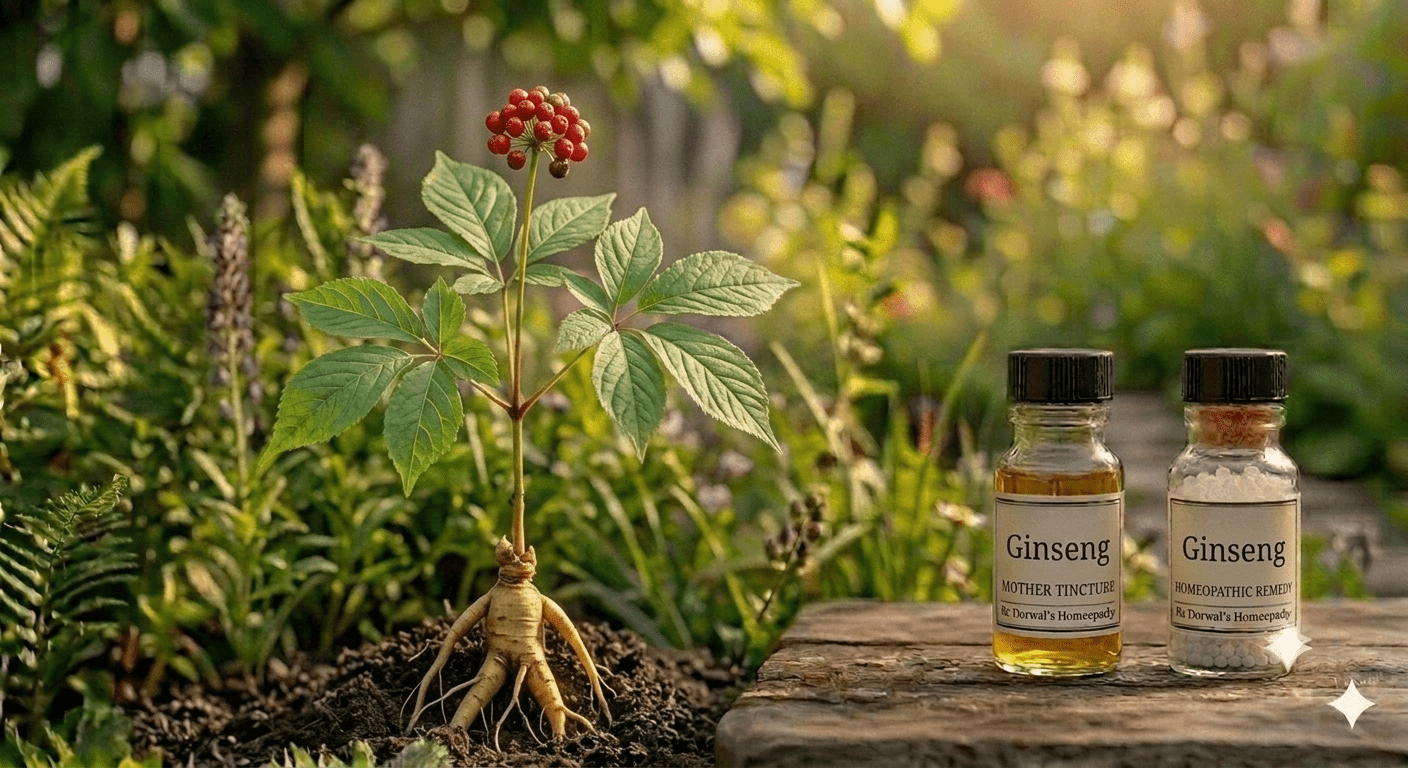
Ginseng, derived from the root of Panax ginseng, is widely recognized in homoeopathic and traditional systems as a potent restorative tonic. It is particularly valued for its profound influence on the nervous system, its ability to combat physical fatigue, and its capacity to enhance vital energy. In clinical practice, it is often termed the “great restorative” for those suffering from the effects of overwork or prolonged physical and mental strain.
Key Clinical Indications and Benefits
Ginseng is specifically indicated for states of weakness and nervous exhaustion. It is clinically indicated for:
- Physical & Mental Exhaustion: Primarily indicated for cases of profound fatigue, whether physical or mental, often resulting from excessive work or chronic stress. It helps the body regain its natural vigor.
- Neuralgia & Nervous Disorders: Highly effective for relieving persistent neuralgic pains, particularly those associated with a weak or depleted nervous system. It helps soothe irritated nerves and restores structural nerve health.
- Digestive & Metabolic Support: It acts as a stimulant to the digestive system, improving appetite and aiding in the absorption of nutrients, which is essential for patients in the convalescent stage.
- Sexual & Reproductive Vitality: Traditionally used to address functional weakness and to support the reproductive system, helping to restore balance and energy in cases of sexual neurasthenia.
Administration & Therapeutic Modalities
- Potency & Dosage: Most commonly employed in the Mother Tincture (Q) form to act as a general restorative tonic, or in lower dilutions (such as 30C) to address specific neuralgic or metabolic complaints, depending on the intensity of the patient’s exhaustion.
- Observation: Because of its stimulating effect on the nervous system, it is essential to monitor the patient’s sleep and energy levels. If the patient experiences over-stimulation or restlessness, the frequency of the dosage should be adjusted.
Dr. Dorwal’s Perspective
In my clinical practice, Ginseng is my primary consideration when I see a patient suffering from “burnout.” When there is a clear history of overwork—manifesting as a combination of nerve-related pains and general physical heaviness—I explain to my patients that this remedy helps “recharge” the body’s depleted reserves. It is not merely a stimulant; it acts as a deep-acting restorative agent. When the constitutional profile aligns with that state of profound depletion and exhaustion, Ginseng is exceptionally effective at awakening the body’s inherent vital force.
Disclaimer: This content is for informational purposes only. Homoeopathic medicines should be taken under the guidance of a qualified homoeopathic physician. Do not self-medicate for chronic or serious medical conditions, and always seek professional advice for any health concerns.
Frequently Asked Questions (FAQs)
It is primarily used as a restorative tonic to combat physical and mental fatigue, improve vitality, and support the nervous system.
Yes, it is often indicated in cases of neuralgia where the pain is linked to nervous exhaustion or depletion.
Excessive use can sometimes lead to over-stimulation or sleep disturbances. It should be used in the correct potency under professional guidance.
As a restorative agent, patients often feel an improvement in their general energy levels and stamina over a consistent course of treatment, depending on the severity of the exhaustion.
