
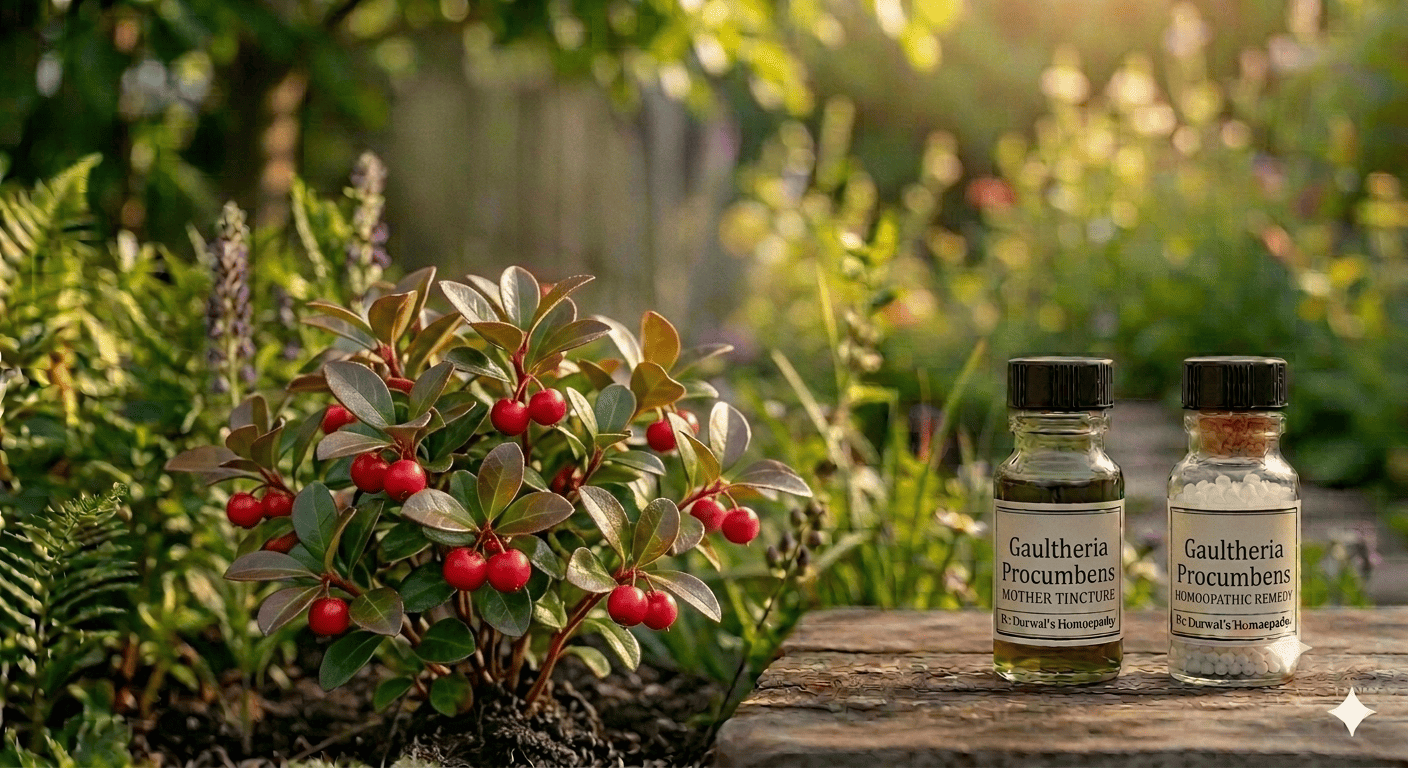
Gaultheria Procumbens, commonly known as Wintergreen, is a potent homoeopathic remedy renowned for its specific affinity for the nervous system and its analgesic properties, particularly in cases of severe neuralgia and inflammatory pain.
Key Clinical Indications and Benefits
Gaultheria Procumbens is highly valued for its ability to provide rapid relief in specific painful conditions:
- Neuralgic & Rheumatic Pain: It is clinically indicated for severe neuralgic pains, especially those affecting the sciatic nerve. It is often considered for conditions characterized by intense, agonizing pain along the nerve pathways.
- Inflammatory Support: Useful in cases of inflammatory conditions such as rheumatism and arthritis, where there is stiffness, swelling, and localized pain.
- Digestive Comfort: Occasionally employed for gastric distress, specifically for cases of “gastralgia” (severe stomach pain) and indigestion characterized by a sensation of fullness and acidity.
- Respiratory Support: Sometimes used to address symptoms of congestion and bronchial irritation, helping to soothe the airways in cases involving thick, difficult mucus.
- Antiseptic & Analgesic properties: Historically noted for its ability to reduce inflammation and dull sharp, shooting pains, making it a supportive remedy for musculoskeletal discomfort.
Administration & Therapeutic Modalities
- Potency & Dosage: Often utilized in low potencies (Such as 30C) or Mother tincture (Q) form, depending on the severity and nature of the pain. The dosage is carefully regulated by the physician to manage acute episodes effectively.
- Observation: Because of its strong action, practitioners monitor for any signs of gastrointestinal irritation or systemic reaction. The remedy is typically tapered as the patient experiences a reduction in nerve pain and improved mobility.
Dr. Dorwal’s Perspective
In my clinical practice, Gaultheria Procumbens is my primary choice for intractable nerve pain, particularly sciatica. I often describe this remedy to my patients as a “nerve quieter” because of its profound ability to dull the intensity of sharp, shooting pains. When treating patients suffering from severe rheumatic stiffness or agonizing sciatic discomfort, this remedy is unmatched in its efficacy. It works by soothing the inflammation surrounding the nerves, helping to restore comfort and ease of movement in cases that have otherwise been resistant to conventional management.
Disclaimer: This content is for informational purposes only. Homoeopathic medicines should be taken under the guidance of a qualified homoeopathic physician. Do not self-medicate for chronic, severe, or nerve-related conditions, and always seek professional advice for any health concerns.
Frequently Asked Questions (FAQs)
It is primarily used to manage severe nerve pain (neuralgia), particularly sciatica, and to reduce inflammatory pain associated with rheumatism and arthritis.
Yes, it is a well-regarded remedy in homoeopathy for relieving the agonizing, shooting pains associated with sciatic nerve involvement.
In appropriate homoeopathic dilutions, it is safe under professional guidance. It should not be used as a substitute for medical advice in serious chronic pain cases.
While primarily known for its pain-relieving qualities, it can also soothe acute gastric pain and indigestion when the symptom profile aligns with its specific therapeutic action.
