
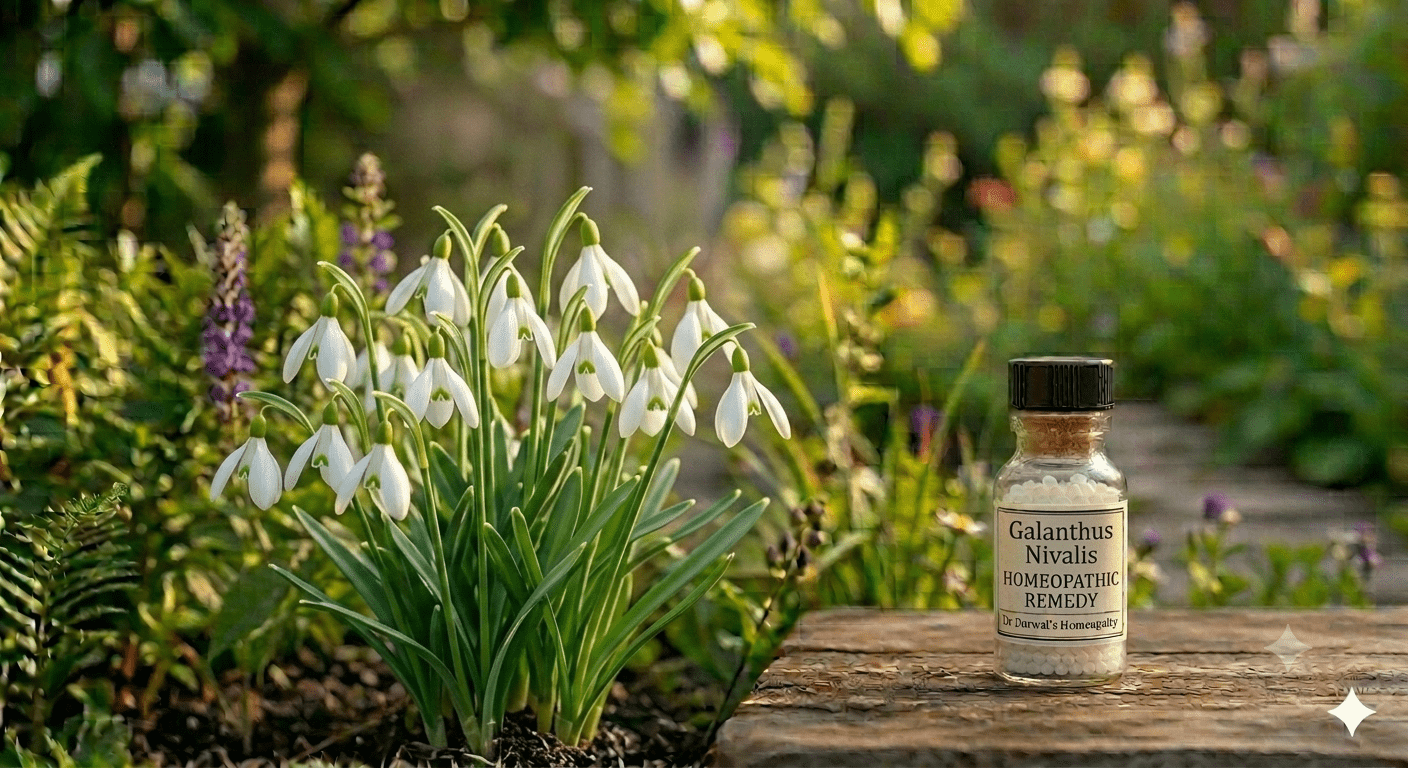
Galanthus Nivalis, commonly known as the Snowdrop, is a significant remedy in homoeopathy recognized for its unique affinity with the cardiovascular and nervous systems. While often noted for its botanical source of the alkaloid galantamine, in homoeopathic practice, it is selected based on specific constitutional and symptomatic presentations, particularly those involving “sinking” sensations and circulatory distress.
Key Clinical Indications and Benefits
Galanthus Nivalis is primarily valued for its stabilizing effect on the heart and its ability to soothe specific nervous and respiratory irritations:
- Cardiovascular Support: This is a notable remedy for cardiac weakness. It is clinically indicated for valvular complaints, mitral regurgitation, and conditions characterized by violent, irregular, or rapid palpitations. It is particularly useful when there is a sense of “collapse” or a feeling that the heart is struggling to maintain compensation.
- “Sinking” Sensations & Faintness: A hallmark of this remedy is a profound feeling of faintness or a “sinking” sensation in the chest or epigastrium. It is often prescribed when a patient experiences these episodes of weakness or near-fainting.
- Head and Throat Affections: It is frequently used to address dull, lingering headaches, often accompanied by a sensation of dryness and soreness in the throat.
- Sleep Disturbances: Clinically indicated for patients who experience a “half-conscious” or restless state during sleep, often accompanied by a sense of worry or anxiety that prevents deep, restorative rest.
- Neuralgic and Respiratory Support: Occasionally employed for neuralgic pains (specifically in the face or head) that worsen with cold drafts. It may also provide relief in mild respiratory cases involving nasal congestion, sneezing, or a dry, irritated throat.
Administration & Therapeutic Modalities
- Potency & Dosage: Typically used in potencies (Such as 30C or 200C). The choice of potency and frequency is strictly determined by the practitioner based on the acuteness or chronicity of the symptoms.
- Observation: Because of its action on the cardiovascular system, clinical monitoring of pulse regularity and the frequency of “sinking” episodes is essential. If the patient reports a stabilization of the heart rate and a reduction in fainting sensations, the remedy is often tapered or discontinued.
Dr. Dorwal’s Perspective
In my clinical practice, Galanthus Nivalis is my primary choice for patients suffering from cardiac weakness, palpitations, and that unsettling, deep-seated feeling of “sinking” or faintness. Beyond its cardiovascular benefits, I rely heavily on this remedy for cases involving persistent, dull headaches and significant sleep disturbances. When a patient presents with a restless, “half-conscious” state of sleep driven by underlying worry, or head pain accompanied by a sense of exhaustion, Galanthus Nivalis is unmatched. It effectively stabilizes the nervous system and cardiac rhythm, bridging the gap between physical distress and mental anxiety to restore calm to both the heart and the mind.
Disclaimer: This content is for informational purposes only. Homoeopathic medicines should be taken under the guidance of a qualified homoeopathic physician. Do not self-medicate for heart-related or other serious medical conditions, and always seek professional advice for any health concerns.
Frequently Asked Questions (FAQs)
It is primarily used in homoeopathy to support heart function, specifically in cases of irregular pulse, violent palpitations, and a sensation of fainting or “sinking.”
Yes, it is indicated for individuals who experience a “half-conscious” or restless, worried feeling during sleep, helping to promote a more peaceful state.
Galanthus Nivalis is generally safe when used in highly diluted homoeopathic preparations. However, as it acts on the cardiovascular system, it should only be used under the supervision of a qualified physician to ensure appropriate matching to your symptoms.
While the alkaloid galantamine (extracted from the plant) is used in conventional medicine for Alzheimer’s, homoeopathic Galanthus Nivalis is a distinct preparation used according to homoeopathic principles for the specific symptoms of faintness, cardiac weakness, and nervous distress. It should not be used as a self-prescribed treatment for cognitive disorders.
