Quick Overview: Homoeopathic remedy Fuchsinum is commonly used for presence of albumin (Protein) in urine, nephritis and skin related conditions.
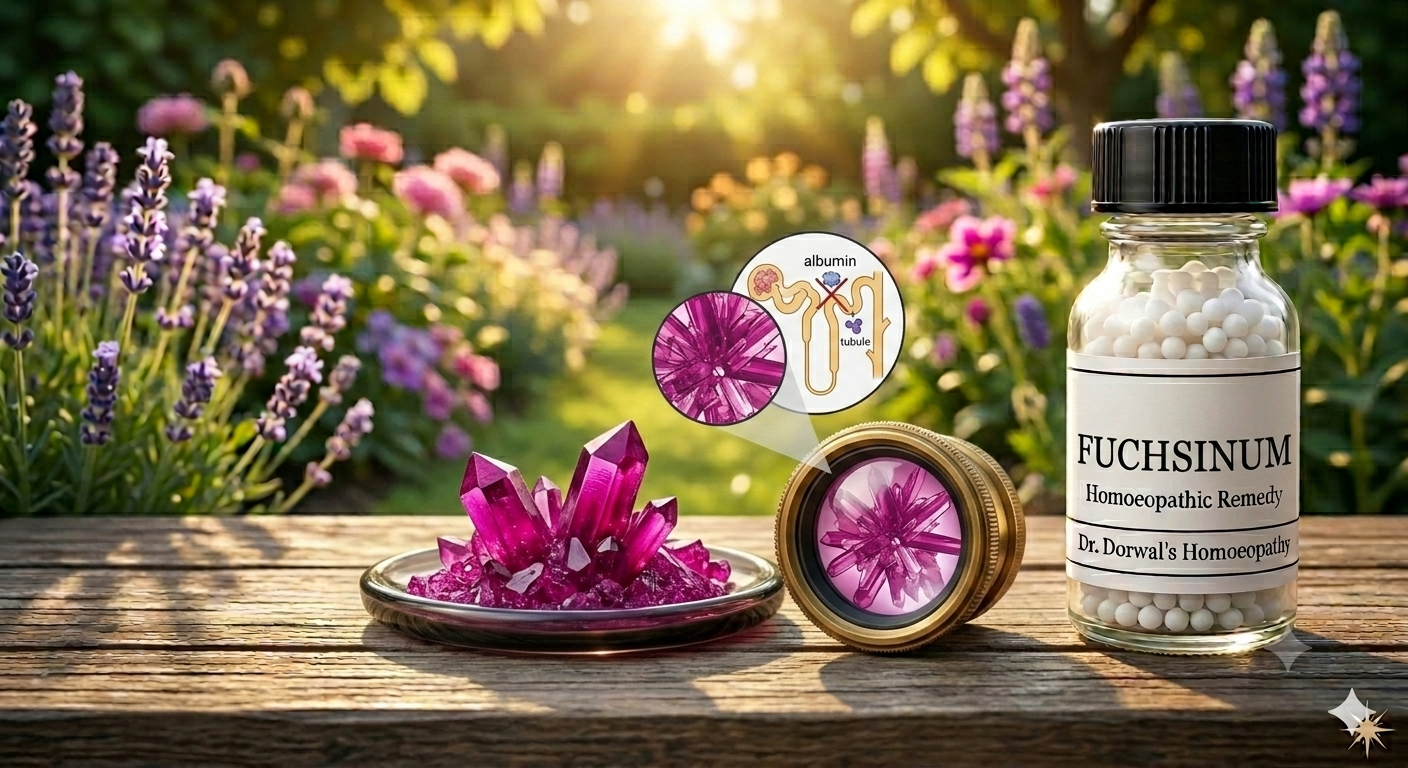
Fuchsinum, prepared from the aniline dye Magenta (Fuchsin), is a specialised homoeopathic remedy with a distinct affinity for the kidneys and skin. It occupies a fairly narrow but well-defined place in materia medica — considered specifically for albuminuria (protein in the urine, reflecting kidney stress) and for indolent, slow-healing ulcers and skin eruptions. Because its use is so specific, it isn’t a remedy reached for casually — the presence of albumin in urine, confirmed by lab testing, is generally what brings this remedy into consideration.
Clinical Indications and Benefits
Fuchsinum is primarily utilized for its therapeutic action on the kidneys and the integrity of the skin.
- Renal Support: Clinically, it is used for albuminuria (the presence of albumin in the urine, often associated with kidney stress). Materia medica describes deep red, albuminous urine as part of its symptom picture, alongside kidney tissue changes at a cortical level.
- Indolent Ulcers: Considered for ulcers and skin eruptions that show little tendency to heal — dry, inactive, “lazy” ulcers rather than acutely inflamed ones.
- Skin & Mucous Membrane Changes: Traditional literature also notes redness of the ears, deep red discolouration of the mouth, swollen gums with a tendency to salivation, and profuse diarrhoea with abdominal pain as part of the fuller symptom picture, alongside its kidney and skin focus.
- Urinary Tract Involvement: Beyond albuminuria, it is also considered in cases, where renal debility contributes to urinary discomfort.
Characteristic Keynotes
- The “Albumin” Connection: Presence of albumin in the urine is the most significant “keynote” or indication for considering Fuchsinum.
- Healing Stasis: It is often chosen for “lazy” or “atonic” ulcers—those that show no inclination to heal or that have a dry, inactive appearance.
How Fuchsinum Differs From Similar Remedies?
Several remedies are considered for albuminuria, and knowing the difference matters clinically:
| Remedy | Key Distinguishing Feature |
|---|---|
| Fuchsinum | Albuminuria linked to cortical nephritis, alongside indolent, slow-healing ulcers — a renal-skin combination |
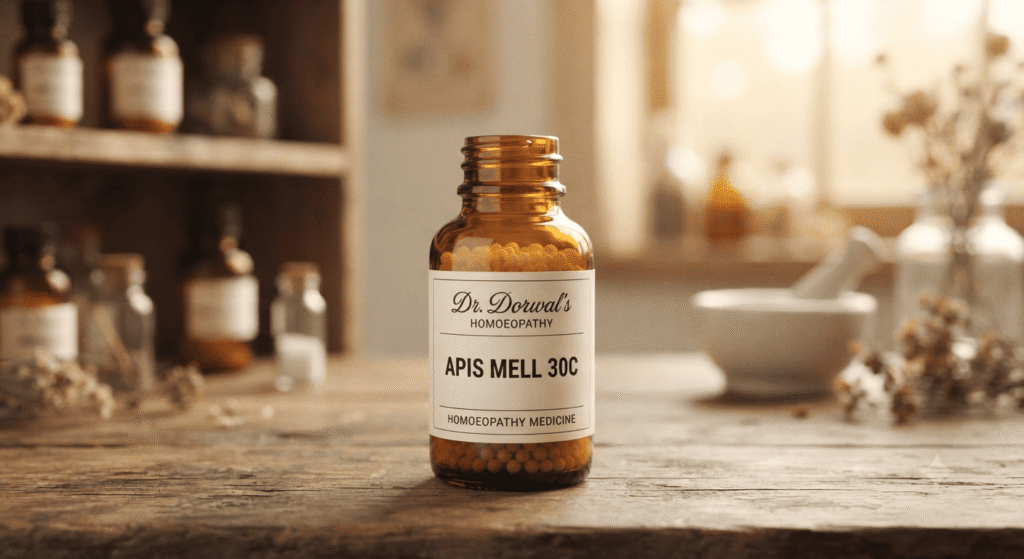
| Apis Mellifica | Albuminuria with marked oedema/swelling — puffiness around the eyes and face, worse from heat, scanty burning urine |
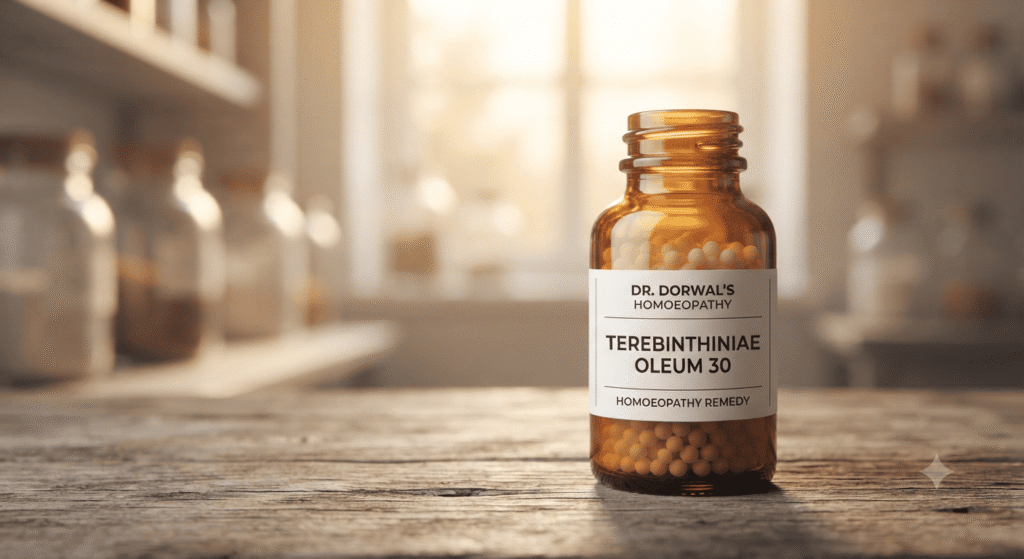
| Terebinthiniae Oleum | Albuminuria with burning, drawing kidney pain; urine is smoky or coffee-ground-like in appearance, sometimes with blood |
| Phosphorus | Albuminuria more typical of later-stage or advanced kidney involvement, often in a thin, sensitive constitution |
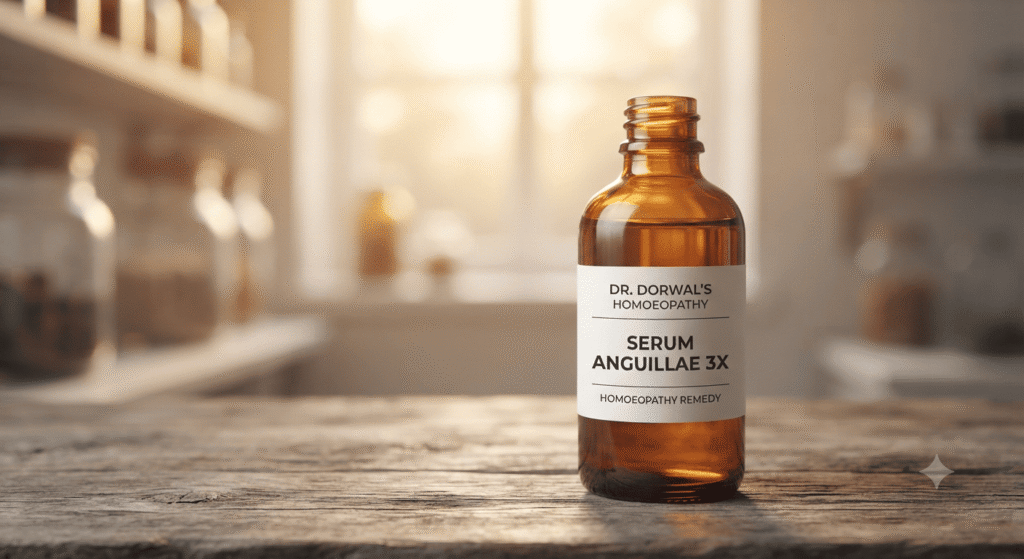
| Serum Anguillae | Albuminuria linked specifically to kidney infection, with a notably reduced volume of urine |
Potency & Administration
- Common potency: 6X to 30C range is traditionally used, with 30C common for chronic presentations.
- Monitoring: This remedy is used for a lab-confirmed condition (albuminuria), tracking urine protein levels through follow-up lab tests is an important part of evaluating whether treatment is working or not. This isn’t a remedy where you rely on symptom relief alone.
- In any case of confirmed albuminuria, it should be used under a physician’s care with proper diagnosis and monitoring, and should be as a complementary approach.
Dr. Dorwal’s Perspective
In my aspect, I view Fuchsinum as a highly specialized tool for cases defined by renal protein loss. While I have not yet utilized this remedy in my own patient cases, it serves as a compelling “clinical anchor” in homoeopathy literature for persistent albuminuria and chronic, non-healing ulcers. When clinical data indicates a renal-skin connection—specifically where lab reports show “leakage” and the skin exhibits “stasis”—Fuchsinum remains a primary consideration for restoring systemic structural integrity and balance.
Disclaimer: This content is for informational purposes only. Homoeopathic medicines should be taken under the guidance of a qualified homoeopathic physician. Do not self-medicate for chronic or serious medical conditions, and always seek professional advice for any health concerns.
Frequently Asked Questions (FAQs)
It is primarily used in homoeopathy to address albuminuria (protein in the urine) and as a supportive agent for chronic, non-healing ulcers or indolent skin eruptions.
No. It is highly specific to cases where albuminuria is the dominant feature. It is not a general kidney tonic and should only be used when the symptom picture strictly matches the remedy’s profile.
Yes, it is often considered for deep, indolent ulcers that fail to granulate or heal, particularly when the surrounding skin is unhealthy or prone to fissures.
Fuchsinum is not typically the first-line remedy for acute urinary tract infections (UTIs). It is more specifically indicated for renal pathology involving protein loss rather than acute inflammatory infections.
Yes — because its main indication (albuminuria) is a lab-confirmed finding, tracking urine protein levels through follow-up testing is an important part of monitoring whether treatment is working.